Bill, Bert & Tom - Yeah Really!

Discussions in Middle-earth lore, language and books.
Post Reply
New Soul
Points: 920 
Posts: 362
Joined: Wed Jun 22, 2022 1:00 am
Those comical trolls in The Hobbit! The entire scene in which they feature is a mini-masterpiece!

But what really was it all about? I mean was there an underlying motive involved? Was there something more to it that nobody has yet discovered?

I think there is an awful lot Tolkien failed to inform us about. And there are very good reasons - as we shall see.

But to reveal, why Tolkien called his trolls Bill, Bert & Tom - I will need to digress:

(a) Firstly, I need to discuss the embedment of Jack (of fairy tale) parallels in Tolkien’s children’s story.
(b) Secondly, I want to emphasize and illustrate how much liking Tolkien had for ‘parody’.


(a) The Hobbit and Jack & the Beanstalk

So the time is ripe to look into Jack and the Beanstalk and comprehend its deeper enmeshment within The Hobbit.
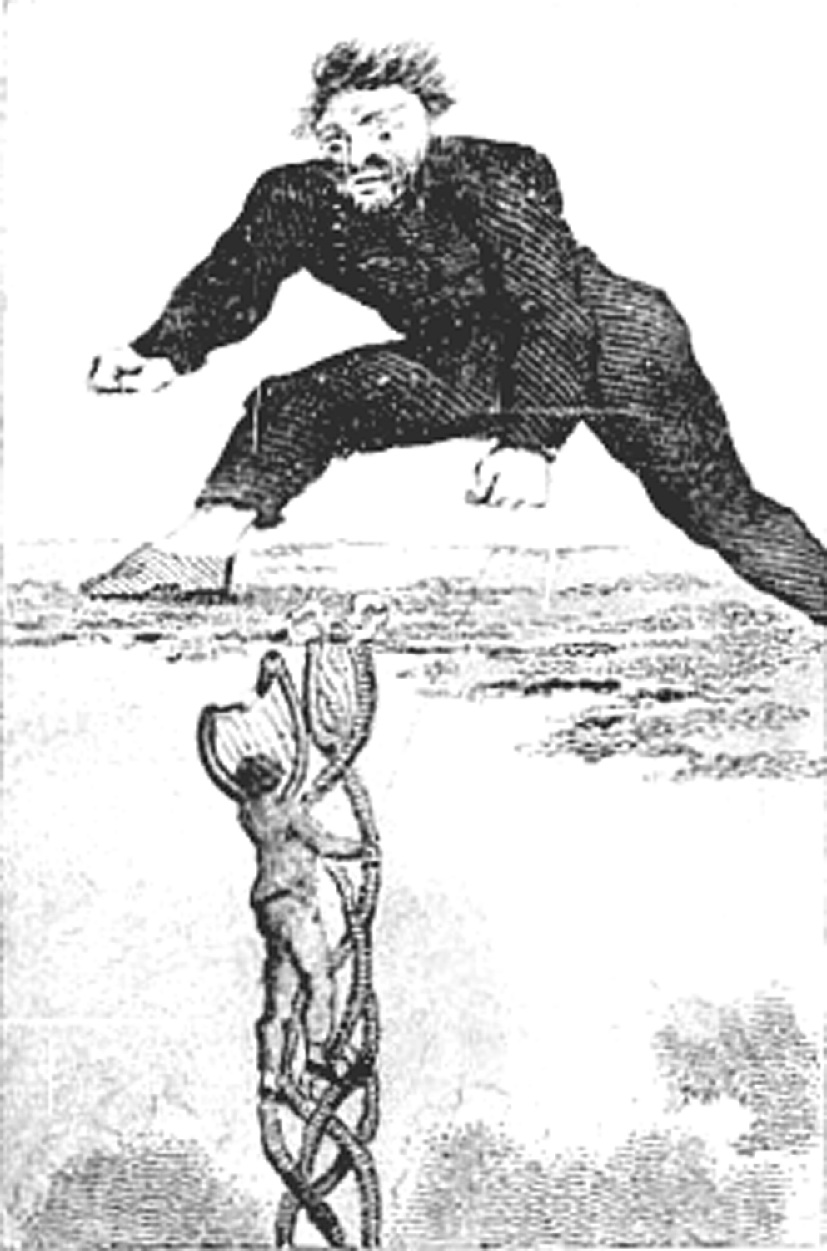
 
Image

Jack escaping from the Giant, ‘The History of Jack and the Beanstalk’, Benjamin Tabart, 1807

 
‘Why would Tolkien have had an interest in Jack and the Beanstalk?’ – I can imagine the wary reader question. 
‘Surely that would be the wrong kind of fairy tale. Isn’t it a nursery tale?’

Hmm … firstly it’s arguably England’s most famous handed down children’s story. And secondly, classifying it as only fit for nurseries would be rather speculative. A pronouncement of a definitive prognosis would be quite wrong. Because even nursery tales are in some instances a mere subset of fairy tales. And Tolkien wasn’t altogether convinced that an adult link to them should be casually cast aside. Indeed, this attitude is reflected by the inclusion of The Man in the Moon Stayed Up Too Late in The Lord of the Rings. A deliberate echo of our ‘modern day’ Hey Diddle Diddle – here was one long-lost and exploitable connection to English lore. Quite obviously then, if the Professor thought that modern-day nursery rhymes could have buried but meaningful links to sing-song of old, then choosing Jack and the Beanstalk is really not so strange!

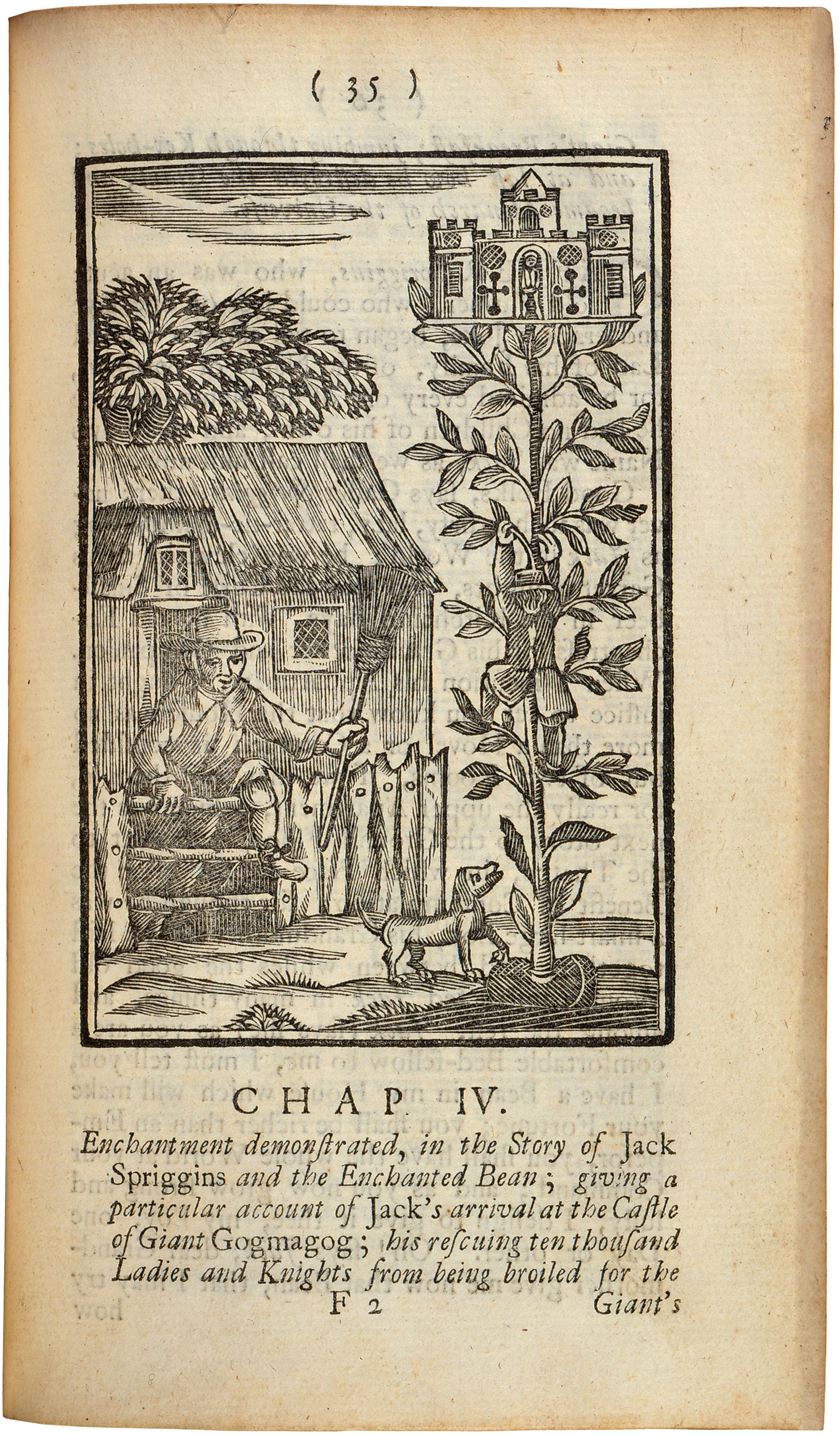
Now the first known printed recording of Jack and the Beanstalk dates from 1734. Under the title of Jack Spriggins and the Enchanted Bean, the story was related in Round about our Coal Fire. Forming one of several ‘Jack tales’, the hero is a quintessential part of traditional English folklore from whom many phrases, rhymes and sayings have sprung.
 
Image

First page of ‘Chapter IV – The Story of Jack Spriggins and the Enchanted Bean’, Round about our Coal Fire, 1734

 
However, the Professor knew that historical elements of the Beanstalk narrative were traceable much further back than the early 18th century. In remarking upon it in his famous Beowulf lecture, clearly he implied the tale preceded John Milton who died in 1674:

“… if Milton had recounted the story of Jack and the Beanstalk in noble verse … he might have done worse …”. 
– Beowulf: The Monsters and the Critics, J.R.R. Tolkien, 1936

Most likely the tale went back even further with the written connection being lost in all but traces from the Elizabethan/Jacobean eras – where the famous ‘fe-fi-fo-fum’ rhyme was imbued in the dramatic plays of George Peele, Thomas Nashe and William Shakespeare:

“Fee, fa, fum, here is the Englishman, …”. 
– The Old Wives Tale, G. Peele, 1595

“… Fy, fa, fum, I smell the blood of an English-man”. 
– Have with you to Saffron-walden, T. Nashe, 1596

“Child Rowland to the dark tower came,
 His word was still, Fie, foh, and fum,
 I smell the blood of a British man.”
 - King Lear, W. Shakespeare, 1605

In more modern times it’s the tale’s 1890 recital by Joseph Jacobs in English Fairy Tales which has established itself as the one closest to the original storyline. And so it’s the one, for comparative purposes, that’s been dwelt on most. To peel away Tolkien’s exterior literary facade and expose matching underlying structural patterns, the drafts of The Lord of the Rings will be examined and then a step back further in time to The Hobbit will be seen to be extraordinarily fruitful.

But first I will turn to early life before scrutinizing The History of Middle-earth series. To piece together a credible yarn there is also factual ‘external’ matter to consider – namely Tolkien’s childhood experiences. It is the run-ins with the ‘Black and White Ogres’ of Sarehole, Birmingham that are most interesting. We need to be particularly mindful of these formative years. Especially as Tolkien himself said:

“… it is the particular use in a particular situation of any motive, whether invented, deliberately borrowed, or unconsciously remembered that is the most interesting thing to consider.” 
– The Letters of J.R.R. Tolkien, Letter #337 – 25 May 1972, Edited by H. Carpenter, 1981

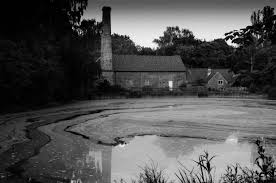
As young boys, both Ronald and his brother Hilary were fascinated by the mill at Sarehole and the adjacent pond which they on and off frequented. Equally, they were terrified by the two working millers, one of whom they nicknamed the ‘White Ogre’, and a local farmer – dubbed the ‘Black Ogre’. It appears that much of the mill’s trade in those times fell to pulverizing bones (instead of grinding grain for flour). The end product subsequently found usage as farm fertilizer:

“… and now the mill’s chief work was the grinding of bones to make manure.”
 – Tolkien: A biography, Birmingham – pg. 20, H. Carpenter, 1977

The ordeals with the ‘White Ogre’ covered in bone dust and the more aggressive ‘Black Ogre’ were vivid childhood memories that remained solidified in Tolkien’s mind. Thus, one may rightfully hypothesize such experiences carried through into his books:

“As for knowing Sarehole Mill, it dominated my childhood. I lived in a small cottage almost immediately beside it, and the old miller of my day and his son were characters of wonder and terror to a small child.”
 – The Letters of J.R.R. Tolkien, Letter #303 – 6 May 1968, Edited by H. Carpenter, 1981
Image
 
The Mill and Pond at Sarehole, Birmingham

 
What was the origin of the last two lines of the classic English rhyme? :

“ ‘… Fee-fi-fo-fum,
 I smell the blood of an Englishman,
 Be he alive or be he dead 
I’ll have his bones to grind my bread.’ ” 
– English Fairy Tales, Jack and the Beanstalk – pg. 63, J. Jacobs, 1890   (my underlined emphasis)

Tolkien might have known that in medieval times bone meal was used as a nutritional supplement and was sometimes mixed in with bread. More than likely he had run across Shakespeare’s rather macabre recipe for a baked pie:

“Hark, villains! I will grind your bones to dust

And with your blood and it I’ll make a paste,

And of the paste a coffin I will rear

And make two pasties of your shameful heads, …
…

Receive the blood: and when that they are dead,

Let me go grind their bones to powder small

And with this hateful liquor temper it,

And in that paste let their vile heads be baked.” 

Titus Andronicus, Act 5 Scene 2, W. Shakespeare, c. 1588-1593

What were the real origins of the ‘Jack tales’? Was there a logical and simple explanation? These are the sort of questions that probably rattled around in an inquisitive philologist’s mind. Could it be that the sources of the ‘fe-fi-fo-fum’ rhyme and English ogres lay in the trades of farming and milling?


…. to be continued

Bard of Imladris
Points: 1 590 
Posts: 1079
Joined: Thu May 14, 2020 2:40 am
Aaah. Never made that Jack and Beanstalk connection. I do see it, though. Isn't it interesting that the Trolls, if they were into farming and milling, eat pastoral society food like roast mutton?

New Soul
Points: 2 817 
Posts: 3091
Joined: Thu Sep 02, 2021 6:24 am
Priya: I have seen the Jack and Beanstock in a movie and read the tale in a book, years ago. Reads interesting. Are you trying to research if the singsongs of the three trolls in the Hobbit are a referencing element to the way song is constructed within the tale of the Beanstock? Has Tolkien not something in the Letters he says about the Trolls themselves, or where he was inspired about? :confused:
Just call me Aiks or Aikári. Notify is off.
Find me stuff in Gondolin.
And let us embark to Valinor!

New Soul
Points: 920 
Posts: 362
Joined: Wed Jun 22, 2022 1:00 am
Hello Rivvy Elf

Aaah. Never made that Jack and Beanstalk connection. I do see it, though. Isn't it interesting that the Trolls, if they were into farming and milling, eat pastoral society food like roast mutton?
Well we know the trolls ate more than:

“ ‘… a village and a half …’ ” between them.

I’m sure a fair percentage would have been cereal crop farmers (growing barley for ale, and wheat for bread). And some of those unfortunate folk had to have processed the grain, so I guess some of them would also have been millers.

So we can loosely say that those man-eating trolls had farming and milling in their blood !!!

But joking aside - what I’m trying to do is put myself in Tolkien’s boots - and in doing so follow his thought process and example per his 1939 OFS lecture paper in which he discussed the source of fairy tales. In particular, I note how he offered up the origin of the Norse god Thor as potentially being derived from exaggerated folk tales based upon a red-bearded ‘farmer’.

Similarly, I’m suggesting that Tolkien might well have thought that the origins of tales about English ogres possibly derived from exaggerated accounts of ‘millers and farmers’. And to boot, he had firsthand experience which reinforced such an idea!


Hello Aiks
Are you trying to research if the singsongs of the three trolls in the Hobbit are a referencing element to the way song is constructed within the tale of the Beanstock?
No - I’m going to try and extract the origin of the troll names Tolkien came up with. But I think that The Hobbit had many underlying links to Jack and the Beanstalk - which I’m trying to bring out into the open too.
Has Tolkien not something in the Letters he says about the Trolls themselves, or where he was inspired about?

I don’t remember that he had anything specific to say about what inspired him to name the trolls: Bert, Tom and William - though I haven’t checked out everything in the newish ‘expanded’ Letters.


———


Continued from last post ….

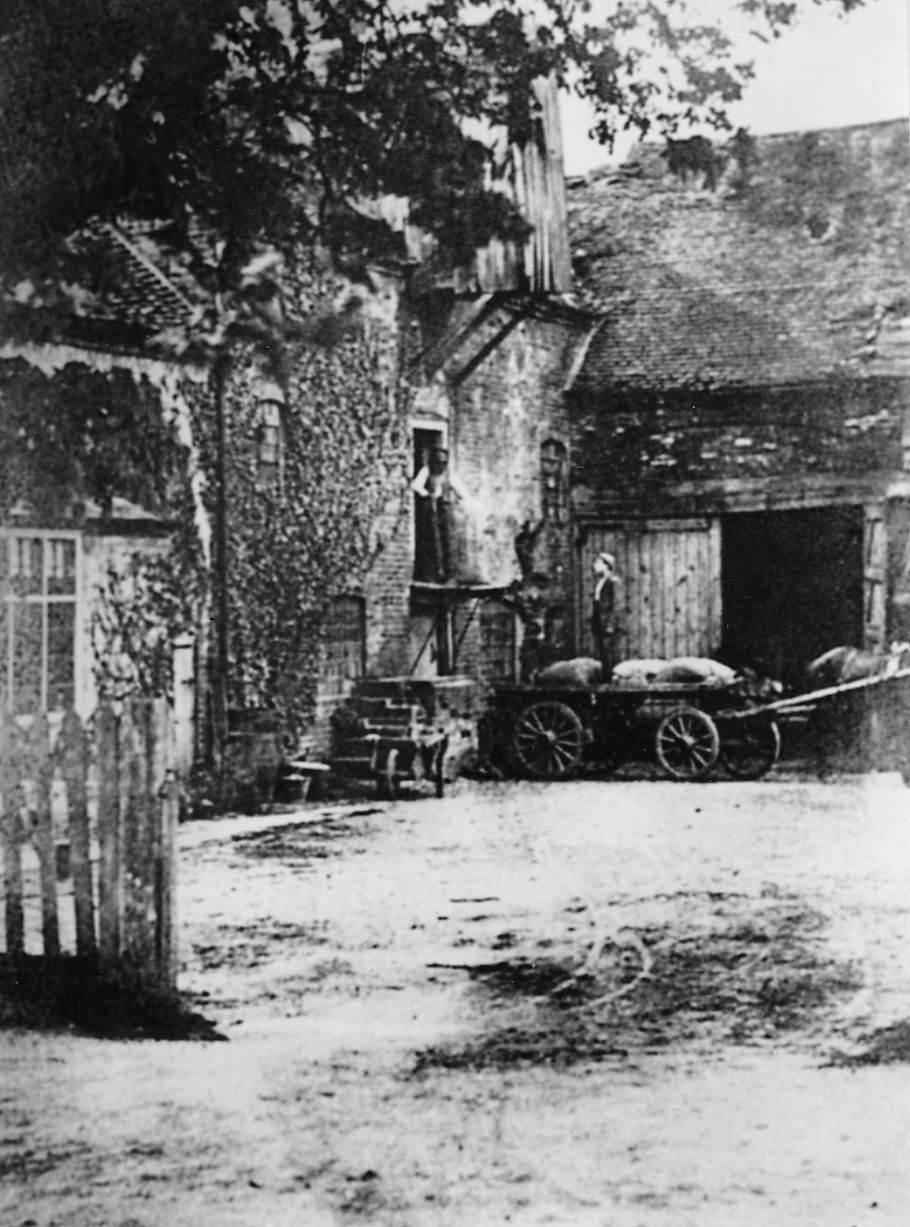
Yes, milling was a dangerous job; if by mishap an unlucky person got trapped by a millstone – there was no escape. Even those alive would be ground to pieces. As for farming – what would the young, uneducated and impressionable have thought of sacks of ground bone bits laden on a cart about to be sent to a farmer’s barn? : 

“… they would … run round to the yard where the sacks were swung down on to a waiting cart.”
 - Tolkien: A biography, Birmingham – pg. 20, H. Carpenter, 1977


Image

Sarehole Mill Loading Zone, c. 1890

 
Cementing the whole shebang is the English fairy tale of The Giant that was a Millar (see Fairy Gold, 1907 by Ernest Rhys). Indeed – here we have a fairy-story involving Jack, a giant (who ground men’s bones to make his bread) and a mill. Though I cannot prove Tolkien read it – we know (for that OFS lecture) that he definitely loaned the book !!!

Whatever the truth, the boys were certainly terrified of the ogrish farmer and miller; and it’s this fragment of knowledge that leads to an insightful supposition that Farmer Maggot was intended as the original Jack and the Beanstalk linking ogre for The Lord of the Rings. Mark Hooker in The Hobbitonian Anthology has examined the etymological origin of ‘Maggot’ and offered ‘Goemagot’ as a possible source.

Goemagot (also known as Gogmagog and Goemagog) is a giant in the legend of the founding of Britain by Geoffrey of Monmouth (see Historia regum Britanniae, c. 1136). And Gogmagog (as we have seen on the front page of Chapter IV from Round about our Coal Fire) was also the earliest recorded giant featuring in the various versions of the Jack and the Beanstalk tales. Apart from etymological similarity, Hooker offers other evidence of farmer Maggot being quite an ‘ogre’ from The Return of the Shadow. In one draft variant he is portrayed as:

“… a violent and intransigeant character, …”,
 - The Return of the Shadow, A Short Cut to Mushrooms – pg. 287, The Second Phase, 1988

and possessed an appearance different to hobbits.

Piecing together another snippet leads to a credible idea that Tolkien intended the farmer’s lands, known as Bamfurlong* to be the legendary site of Jack’s beanstalk:

“Bamfurlong. An English place-name, probably from bean ‘bean’ and furlong (in the sense of a division of a common field), the name being given to a strip of land usually reserved for beans.”
 - Nomenclature of the Lord of the Rings, Place-Names, J.R.R. Tolkien   (Italicized emphasis on first bean and furlong)

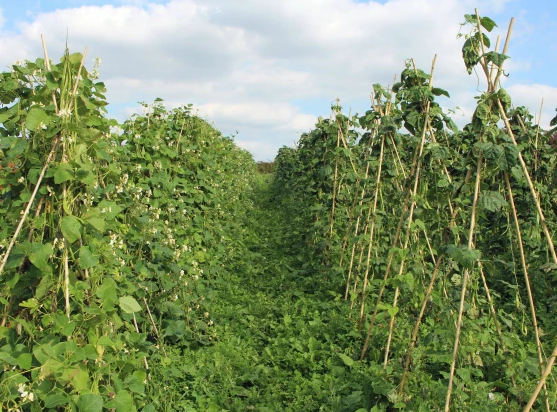
Did Tolkien envision a long line of farmed beanstalks intertwining into each other giving rise from afar to one that looked singular and gigantic?


Image

A Field of Runner Beans


In an area of the Shire where the microclimate was particularly rainy – on an overcast day, when the clouds were low – would Jack (whoever he was) on a trek towards the Maggot residence have felt from a perspective standpoint that he was climbing alongside an endless beanstalk reaching into the sky?

Was the path to Maggot’s high-walled residence seen as an approach to a forbidding mansion occupied by an ogre-like individual? One maddened by the sporadic theft of his treasure – his precious crops. So taken together, were these sets of circumstances contrived ideas to stitch in much of Jack and the Beanstalk?

The answers to all the above is – we can’t say for sure – but quite possibly: yes! Until of course Tolkien abandoned the idea of making:

“… Maggot not a hobbit, but some other kind of creature …”,
 - The Return of the Shadow, Tom Bombadil The First Phase – pg. 117, 1988

and supplanted him by the Black Riders as the real chasing ‘ogres’ in the final story. A story which in a way paralleled the ‘Jack tales’ in that little people lived proximate to beings much larger than themselves. This was after all an attempt:

“… to restore to the English an epic tradition and present them with a mythology of their own: …”. 
– The Letters of J.R.R. Tolkien, Letter #180 – 14 January 1956, Edited by H. Carpenter, 1981

In the end Tolkien was left with little choice when it came to “tradition”. Some elements of the widespread stories about Jack had to be embedded within his mythology to obtain specific English fairy tale linkage and restore, or rather subcreate, a deserved “epic”. Unfortunately not much of great quality existed to build upon. Much ancient fairy-story material was:

“… impoverished chap-book stuff.” 
– The Letters of J.R.R. Tolkien, Letter #131 – late 1951, Edited by H. Carpenter, 1981


… more to come

New Soul
Points: 2 817 
Posts: 3091
Joined: Thu Sep 02, 2021 6:24 am
Hello Priya! :grin: : I did check thus on the Tolkien Wiki to find more out, and yes, there is unsent letter nr. 153 in the book Letters of Tolkien, Allen and Unwin 1981. Gotta take a look... ouch quite some text. :headshake: About the three Trolls is a big paragraph in the letter you have to read yourself, because it is too much to copy for me online by hand.
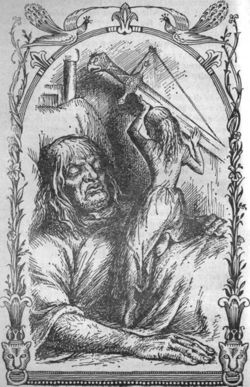
"I think they are mere counterfeits and hence when you allow Trolls to speak you give them a power that in our world indicates the possession of a soul. I don't agree that my trolls show any sign of doing anything 'good', strictly and unsentimentally speaking. I'm not saying William felt pity."

Tolkien is referencing on the subject Pity, what these three trolls, Bert, Tom and William don't have at all. I quoted what I felt is the most important thing in the paragraph?
Just call me Aiks or Aikári. Notify is off.
Find me stuff in Gondolin.
And let us embark to Valinor!

New Soul
Points: 920 
Posts: 362
Joined: Wed Jun 22, 2022 1:00 am
Greetings Aiks

I will get to this very important letter (#153) in my thread on ‘Goldberry’ very shortly. For it concerns not just trolls, but her too.

It’s notable that in the same letter Tolkien also remarked that:

“… I should not have called the troll William.”

But he doesn’t say why!


—————


Jack in The Hobbit

Now over in Chrysophlax Dives ‘Bombadil’ thread - I’ve tried to expose how ‘Jack’ fragments were buried in The Fellowship of the Ring – based of course on logically connecting dispersed information. Out of more than curiosity, for it would be a dereliction of a researcher’s duty, the right thing to do now – is to take another look at The Hobbit. Had ‘Jack’ been subtly buried in there too?

Funnily enough right at the beginning of the book the careful reader is alerted to a possible allusion to the eponymous English hero through the unexplained background of:

“… tales … about … giants … and the unexpected luck of widows’ sons?”
 – The Hobbit, An Unexpected Party

Though it’s insinuated the persons and events are within ‘The Hobbit mythology’, given how Tolkien desired to engage the young reader – the early placement may have been made with the intent to get his audience to think about their own world’s fairy tales. As perhaps the insertion of: 

“Poor Bilbo sat in the dark thinking of all the horrible names of all the giants and ogres he had ever heard told of in tales, …”, 
– The Hobbit, Riddles in the Dark

was to remind them of the likes of Blunderbore, Thunderdell and Cormoran. 

Thus ever so subtly, an undertone of ‘Jack’ creeps in. Because Jack of course is a widows’ son in the Beanstalk tale and a multiple ogre/giant slayer of all the above. Which leads one automatically to think back about Bilbo himself. Why? Because Bilbo was once a widows’ son too. And so with that as a starting point, once we probe deeper – some further remarkable likenesses emerge.

As ‘simple’ (perhaps we can say naive) bachelors – both Bilbo and Jack embark on a quest with courage but no personal heroic pedigree behind them. Yes, by design Bilbo followed in the footsteps of Jack – a remarkably resourceful and dexterous fellow, of quite ordinary stock:

“The story and its sequel are … about the achievements of specially graced and gifted individuals.” 
– The Letters of J.R.R. Tolkien, Letter #281 – 15 December 1965, Edited by H. Carpenter, 1981

“… I love the vulgar and simple as dearly as the noble, and nothing moves my heart … so much as ‘ennoblement’ …”.
 – The Letters of J.R.R. Tolkien, Letter #180 – 14 January 1956, Edited by H. Carpenter, 1981   (Tolkien’s emphasis)

“There are of course certain things and themes that move me specially. The inter-relations between the ‘noble’ and the ‘simple’ (or common, vulgar) for instance. The ennoblement of the ignoble I find specially moving.”
 – The Letters of J.R.R. Tolkien, Letter #165 – 30 June 1955, Edited by H. Carpenter, 1981   (Tolkien’s emphasis)

Because of course – both have adventures, return home rich, become famous and then live happily ever after. More pointedly, endowed with extraordinary luck – both become highly successful burglars!

The purpose behind both tales was not to portray the heroes as common thieves or roguish robbers – rather as something more acceptable, almost to the point of the dubious profession having a chivalrous side. Stealing from a home (a giant’s castle or a dragon’s lair) was really not that insidious a crime – because both Jack and Bilbo were rightfully taking back a former owner’s belongings who no doubt had been forcefully dispossessed. In each case there are three ‘significant’ thefts (or attempts):

Jack: Bag of gold, The Hen that lays golden eggs and a Magic Harp

Bilbo: Troll Purse, Gold Cup and the Arkenstone.

Remarkably bags of gold, magic harps and a jewel that is perhaps not too far off in size or shape to a hen’s egg, feature in The Hobbit thus resonating with Jack’s takings. And while the purse doesn’t show up in the Beanstalk tale, it does appear in another English fairy tale involving giant folk called Mollie Whuppie:

“ ‘… if ye would … steal the purse that lies below the giant’s pillow, …’ … And Molly said she would try. So she set out for the giant’s house, and slipped in, … and waited till the giant … was snoring sound asleep. She … slipped her hand below the pillow, and got out the purse; but just as she was going out the giant wakened, and ran after her; …”.
 - English Fairy Tales, Mollie Whuppie – pg. 127, J. Jacobs, 1890

 
Image

‘Mollie Whuppy steals the Giant’s Sword’, English Fairy Tales, Joseph Jacobs, 1890

 
Mollie is the female equivalent to Jack – who bit by bit similarly steals an ogre’s treasure and outwits him too. What we see then is a blended amalgamation for the ‘Troll scene’ in The Hobbit. Therein the purse acts like the harp from Jack and the Beanstalk in its vocal alert. Yes a talking harp and a talking purse. Both knew they were being stolen from their current owner!

Also noteworthy is that in both Jack and the Beanstalk and The Hobbit – the main monstrous denizens are at home and asleep when first burgled and that both become aware of the presence of foes through the act of sniffing. And if Tolkien had taken up his initial storyline – Bilbo, like Jack – would have been the one to directly slay the enemy.

Whether Tolkien shaped his plot intentionally to subtly give the young reader a sense of comforting familiarity is unknown. It is quite possible that this was all accidental or even subconsciously present. However, the possibility also exists that themes within The Hobbit has purposely woven in features reminiscent of classic English fairy tale:

“… the tale it is, … derived from (previously digested) epic, mythology, and fairy-story – not, however, Victorian in authorship, …”.
 – The Letters of J.R.R. Tolkien, Letter #25 – January/February 1938, Edited by H. Carpenter, 1981   (my underlined emphasis)

Whatever the truth – as near to certainty as one can reasonably be – what was deliberately contrived, with mischief in mind, were Tolkien’s trolls!

New Soul
Points: 2 817 
Posts: 3091
Joined: Thu Sep 02, 2021 6:24 am
Priya: Sure, I read about it there. :thumbs: The misschief of the trolls is another chapter. :googly:
Just call me Aiks or Aikári. Notify is off.
Find me stuff in Gondolin.
And let us embark to Valinor!

New Soul
Points: 920 
Posts: 362
Joined: Wed Jun 22, 2022 1:00 am
Hello Aiks

The mischief of the trolls is I believe a deliberately contrived parody. But to help convince readers of this thread - the rest of the post focuses on how much Tolkien enjoyed this type of humor. In my next post I will reveal who Bert, Bill & Tom were named after, and begin providing substantiating evidence too.


————


Tolkien & Parody

If we step back and take an honest look at Tolkien’s non-academic works, from what we know – satire and parody played a subtle part in much of the corpus. We know Tolkien was not shy of using parody himself and admitting to it:

“ ‘The King of the Green Dozen’ is the story of the King of Iwerddon … The Story, which is set in Wales, parodies the ‘high’ style of narrative.” 
– The Letters of J.R.R. Tolkien, Notes to Letter #33, 31 August 1938, Edited by H. Carpenter, 1981 (my underlined emphasis)

“The toponymy of The Shire … is a ‘parody’ of that of rural England, …”.
 - The Letters of J.R.R. Tolkien, Letter #190 – 3 July 1956, Edited by H. Carpenter, 1981   (my underlined emphasis, Tolkien’s emphasis in quotes)

“… I had the remarkable, and in the event extremely enjoyable, experience in Holland … The dinner … speeches were interleaved between the courses. … My final reply was I hope adequate, … It was partly a parody of Bilbo’s speech in Chapter I.” 
– The Letters of J.R.R. Tolkien, Letter #206 – 8 April 1958, Edited by H. Carpenter, 1981   (my underlined emphasis)

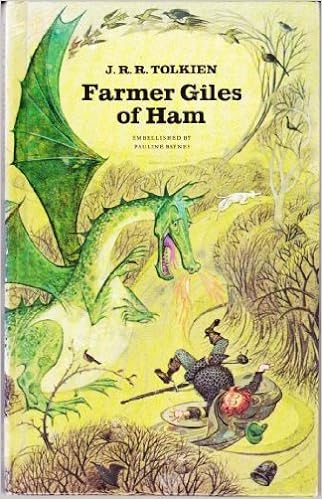
Adding to the above scholars have noted numerous other examples. We can throw in Farmer Giles of Ham:


Image

‘Farmer Giles of Ham’, J.R.R. Tolkien (1978 Edition)


“Farmer Giles of Ham represents Tolkien’s only medieval parody that both imitates a medieval form or genre and also burlesques medieval literary conventions, ideas, and characters …”.
 – Tolkien’s Art: A Mythology for England, Chapter 4, J. Chance, 2001 (my underlined emphasis)

Additionally we have:

“The Battle of the Eastern Field. Poem, first published … (March 1911) … the poem is a parody of ‘The Battle of the Lake Regillus’ from the Lays of Ancient Rome by Thomas Babington Macaulay.” 
– The J.R.R. Tolkien Companion and Guide 2017 Edition, Reader’s Guide, The Battle of the Eastern Field – pgs. 110-111, W. Hammond and C. Scull   (my underlined emphasis)

There is also the ‘Doworst Parody’, a manuscript created before December 1933, being a:

“Humorous verse ‘report’, relating remarkable errors committed by nervous students in oral English examinations at the University of Oxford. … in the style and metre of the fourteenth-century alliterative poem Piers Plowman, and parodies its vision of ‘dobest’.” 
– J.R.R. Tolkien Companion and Guide, Reader’s Guide 2017 Edition, Doworst – pg. 304, C. Scull & W. Hammond (my underlined emphasis)

We can also include The Notion Club Papers – an Oxford based discussion club loosely modeled as a nostalgic parody of Tolkien’s own closely knit literary circle, the Inklings. Nor should we ignore Leaf by Niggle – an oft conjectured self-parody.


Then is it so unbelievable that The Hobbit could contain parody?


…. more to come

New Soul
Points: 2 817 
Posts: 3091
Joined: Thu Sep 02, 2021 6:24 am
Priya: Oh a deliberate converted parody? I see. :nod: Hehe, I know that the toponymy of the Shire has a link to that of England. Has Tolkien been in Holland? Curious detail. I'll read in Letter 206. Just to know it for myself. That little book I have myself, but somehow never read it. Oh I believer there are parodies everywhere in Tolkien's works, intentionally as well not.
Just call me Aiks or Aikári. Notify is off.
Find me stuff in Gondolin.
And let us embark to Valinor!

New Soul
Points: 920 
Posts: 362
Joined: Wed Jun 22, 2022 1:00 am
Well Aiks - It’s going to take a few posts to lay out for the reader the full extent of the troll parody. I hope you (and other thread readers) have some patience!


———


A Triangle of Rivalry


If one peruses John Rateliff’s The History of The Hobbit or Douglas Anderson’s The Annotated Hobbit, it becomes abundantly plain Tolkien included much which had an academic background for various aspects of the children’s tale. Surprisingly missed is the most academic piece of all. That being a parodied scene involving a mixture of ‘Jack’ related fairy tale and native period history. Indeed, that is where the evidence points!

Now there are several ‘Jack stories’ and they are thought to have sprung from Cornwall, in the west of England. Believed to be Celtic in origin they are interwoven in part with Arthurian tales and feature ogres/giants prominently. Trolls were not so abundant in English folklore. Yet it’s possible that in the mid-to-late twenties – yarns related by Icelandic visitors seeded their inclusion in The Hobbit:

“For some years after the move to 22 Northmoor Road, a series of Icelandic au pair girls live with the Tolkien family and entertain the boys with tales about trolls.” 
– The J.R.R. Tolkien Companion and Guide 2006 Edition, Chronology, ?1926-?1930, C. Scull & W. Hammond


Image
Scandinavian Trolls and a Princess, John Bauer, 1915


In any case, Tolkien himself lumped them together with classical ogres per their man-eating portrayal in The Hobbit:

“ ‘Never a blinking bit of manflesh have we had for long enough,’ … 
‘You’ve et a village and a half between yer, since we come down from the mountains. …’ ”.
 - The Hobbit, Roast Mutton

Many readers have wondered about and puzzled over the discordant trolls. Not the trolls themselves – rather their anachronistic names and peculiarly accented vulgar tone of speech. Given how carefully Tolkien selected the starring wizard and majority of dwarf names from the Norse Elder Edda, and how others would have been equally unfamiliar to the child reader – Beorn, Elrond and Bilbo being prime examples – the ones for the trolls seem ridiculously out of place. Left then – was an aberration so conspicuous, that it sticks out like a sore thumb. Tom, Bert and Bill – yeah really?

When it came to Smaug, Tolkien confessed:

“The dragon bears as name – a pseudonym – the past tense of the primitive Germanic verb Smugan, to squeeze through a hole: a low philological jest.”
 – The Letters of J.R.R. Tolkien, Letter #25 – January/February 1938, Edited by H. Carpenter, 1981   (my underlined emphasis)

What hasn’t been investigated is whether Tom, Bert and Bill were also named in jest. In fact, I can find neither this angle being examined by scholars, or any credible proposals on why Tolkien opted for those particular names. However, the answer I believe is actually quite simple. Indeed, Tolkien chose them in fun. For they make up a Renaissance parody. It was one which ridiculed three English giants of the Elizabethan era. Those being giants in the fields of English drama, poetry and classical acting. Bill (William) satirically represented William Shakespeare, Tom spoofed Thomas Nashe and Bert parodied Robert Greene.

The fracas involving Shakespeare and Greene is a well-known part of Elizabethan history. It culminates in a posthumously published play of Robert Greene’s called a Groats-worth of Witte. Within he purportedly attacked a young and increasingly successful Shakespeare – labeling him an ‘upstart Crow’ and identifying him through the punning pseudonym ‘Shake-scene’:

“Yes trust them not: for there is an upstart Crow, beautified with our feathers, that with his Tygers hart wrapt in a Players hyde*, supposes he is as well able to bombast out a blanke verse as the best of you: and being an absolute Johannes fac totum**, is in his owne conceit the onely Shake-scene in a countrey.” 
– Groats-worth of Witte, bought with a million of Repentance, R. Greene, 1592


* Alludes to a similar phrase in Shakespeare’s Henry VI.

** Jack of all trades.


… more to come

Tree
Points: 4 777 
Posts: 3136
Joined: Sun May 17, 2020 7:54 pm
O my word, Priya! I do believe you are right.

Tom, Bert, and Bill = Thomas Nashe, Robert Greene, and William Shakespeare.

A Renaissance parody. Wow. I just googled this, which was enough to show that Nash championed Greene in his dispute with Shakespeare. I have not got further than this, and I really want to read what you have to say on this. But all at once and immediately this seems both plausible and likely - a threesome of proper names that lodges in the back of the Professor's mind as (say) he listens to some tedious colleague drone on about Elizabethan drama, and ends up as the three trolls who argue about the best way to eat 13 Dwarves.

Congratulations!
Eat earth. Dig deep. Drink water.

New Soul
Points: 2 817 
Posts: 3091
Joined: Thu Sep 02, 2021 6:24 am
Ugh I was just weeding in the garden, and I could do inside because dark clouds appeared. :anger:

Priya: Patience? Do I know patience? :googly: I think the choice of names are chosen for the stupidity they reflect together by their simplicity. I can come in your thought Tolkien chose them for fun. Would you connect the trolls to the times of Shakespeare? Hmm, I never did it. :headshake: Nor I feel a sense of it when reading the discussion of how to eat the Dwarves. Sorry, I don't recognise it.

Chrys: I don't know. The native English are better in recognising this than a foreign Hollander. Nash and Green I have never heard off.
Just call me Aiks or Aikári. Notify is off.
Find me stuff in Gondolin.
And let us embark to Valinor!

Tree
Points: 4 777 
Posts: 3136
Joined: Sun May 17, 2020 7:54 pm
Aiks, context is everything. In the parodies that Priya mentions above, especially relevant is Doworst, an illuminated manuscript made by Tolkien for his friend Chambers and sent as a Christmas gift in December 1933, a parody of Oxford oral examinations. From the point of view of you or I, some long-forgotten dispute between playwrights of the Elizabethan stage is completely random, but for an Oxford Professor of English it is rather the material of background discussion and just the kind of random thing to lodge in Tolkien's mind and find expression in three trolls. Worth bearing in mind that Tolkien had a complicated, if not problematic relationship with Shakespeare, so the trolls kind of fits. Not sure I can justify my feeling more than that - it makes sense, and even seems likely to me.
Eat earth. Dig deep. Drink water.

New Soul
Points: 2 817 
Posts: 3091
Joined: Thu Sep 02, 2021 6:24 am
Chrys: I read the Doworst alliterating poem of him, as December gift. It is indeed a funny parody to have a good laugh over. Tolkien surely had a lot of fun creating a document on vellum in the style of the Middle Ages. A parody on the Oxford exams, well there is some racune behind it. I think Piers Plowman wasn't loved on the exam. And thus came this document in the world. It is a thing that creative students would do. There is not much to it, that an exam moment rediculed. :lol: The professor in question of the oral exam wouldn't have appreciated, if he knew about it, but probably not.
Just call me Aiks or Aikári. Notify is off.
Find me stuff in Gondolin.
And let us embark to Valinor!

New Soul
Points: 920 
Posts: 362
Joined: Wed Jun 22, 2022 1:00 am
Hello Chrysophylax Dives

You are too kind. At least you are open to the suggestion. It will take a lot more effort to convince others - I suspect!


Hello Aiks

Gardening, eh?

Perhaps you might consider changing your forum username to ‘Sam larınian’ :smile:
I know you have doubts at the moment, But I hope it begins to click for you after a couple of more posts of mine. There’s quite a bit of less mushy evidence to come after this posting.


—————


… continued from my previous post

 
As to Robert Greene’s slur against Shakespeare, Thomas Nashe (Greene’s friend) – denied involvement in the affair. Nevertheless, it is fairly well-established that these three were part of a handful of great Elizabethan playwrights who sometimes collaborated with one another but were also intense rivals. As a matter of fact, the literary jealousy is quite famous among historians. Famous enough that the BBC (British Broadcasting Corporation) aired the dispute in a comedic six-part television series titled Upstart Crow in 2016.


Image


Robert Greene, from the title page of the pamphlet ‘Greene in Conceipt’, 1598


The history lesson will not be repeated here for there are several interpretations of what actually took place; while there are even more on how the evidence can be read. Nonetheless, within correspondences and play pamphlets, there are subtle allegations of plagiarism and sneerings at Shakespeare’s lack of university* education and his currying of favors through underhand dealings with the aristocracy.

Tolkien no doubt thought such shenanigans were hilarious. For on occasions he showed no particular deference to The Bard of Avon. Actually quite the opposite. As some of his documented thoughts actively voice criticism.

So if we look carefully at The Hobbit, it is quite obvious that the main antagonism is between Bill and Bert. Having already started the needling:

“ ‘Mutton yesterday, mutton today, and blimey, if it don’t look like mutton again tomorrer,’ …”, 
– The Hobbit, Roast Mutton

it is Bert who continues to escalate matters and then lands the first blow – just as Robert Greene historically lashed out at Shakespeare:

“ ‘You’re a fat fool, William,’ said Bert, ‘as I’ve said afore this evening.’ … ‘And I won’t take that from you, Bill Huggins,’ says Bert, and puts his fist** in William’s eye.” 
– The Hobbit, Roast Mutton

And if we look even more carefully – Tom seems to be much more aligned with Bert than William, mirroring the actual relationship between the playwrights:


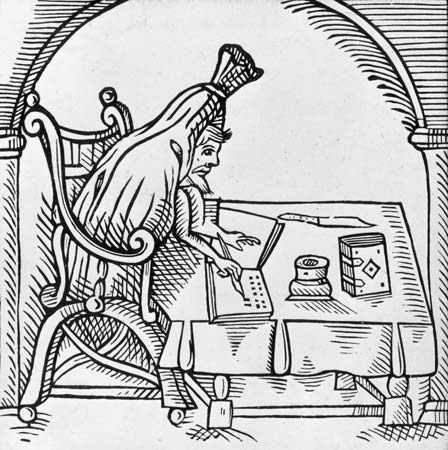
Image


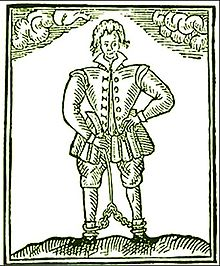
Thomas Nashe***, Wood-cut


“ ‘Mutton yesterday, mutton today, and blimey, if it don’t look like mutton again tomorrer,’ said one of the trolls. ‘Never a blinking bit of manflesh have we had for long enough,’ said a second. ‘What the ‘ell William was a-thinkin’ of to bring us into these parts …’ …

Bert and Tom went off to the barrel. …

‘There’s more to come yet,’ said Tom … ‘I reckon you’re right,’ said Bert, …

‘Now stop it!’ said Tom and Bert together.”

The Hobbit, Roast Mutton

Bill clearly thought that there was plenty of tasty fare for them all – which seemingly voices a sentiment that the Elizabethan Renaissance era was more than rich enough to accommodate a small bunch of decent playwrights:

“ ‘… You’ve et a village and a half between yer, … And time’s been up our way, when yer’d have said “thank yer Bill” for a nice bit o’ fat valley mutton like what this is.’ ”
 - The Hobbit, Roast Mutton

The rivalry was laughable and fully deserving of caricaturist mockery. To the point where these three rural born men, who to make a name and earn a living had moved to London, could be made fun of by being endowed with buffoonish cockney or working class urban accents. Indeed, the whole situation was positively farcical as the question of who plagiarized who was made part of the parody as a vocalized conceit:

“ ‘Who’s a-arguing?’ said William, who thought it was Bert that had spoken. ‘You are,’ said Bert. ‘You’re a liar,’ said William; …

‘No good boiling ’em! We ain’t got no water, and it’s a long way to the well and all,’ said a voice. Bert and William thought it was Tom’s. …

‘I made sure it was yellow,’ said Bert. ‘Yellow it was,’ said William. ‘Then what did yer say it was grey for?’ said Bert. ‘I never did. Tom said it.’ ‘That I never did!’ said Tom. ‘It was you.’ ”.


– The Hobbit, Roast Mutton

Though the ‘borrowing’ of literary writings from others had become common-day practice in Elizabethan times, it still should be seen for it was. In Elrond’s wise words, these brutish ‘dramatists’ were no different to others:

“ ‘… your trolls had plundered, other plunderers, …’ ”.
 - The Hobbit, A Short Rest


* Nashe and Greene along with other prominent dramatists including George Peele and Christopher Marlowe are known as the ‘University Wits’.

** There is only a one in six chance of this combination arising (Bert striking William) – already alerting us to a high possibility of deliberate contrivance.

** Nashe also took part in a violent literary controversy with the poet Gabriel Harvey and his brother Richard. Richard Harvey had been extremely critical of Nashe’s preface to Greene’s Menaphon, and Nashe retaliated in Pierce Penniless, His Supplication to the Devil (1592). … Gabriel Harvey wrote an unpleasant account of Greene’s final days in his Four Letters the same year, and Nashe responded by writing Four Letters Confuted to defend his dead friend’s memory.” 
– The Life of Thomas Nashe (1567-1601), http://www.luminarium.org/


… much more to come

Tree
Points: 4 777 
Posts: 3136
Joined: Sun May 17, 2020 7:54 pm
‘You’re a fat fool, William,’ said Bert, ‘as I’ve said afore this evening.’ … ‘And I won’t take that from you, Bill Huggins,’ says Bert, and puts his fist in William’s eye. 
– The Hobbit, Roast Mutton
To read that and think of someone punching Shakespeare in the eye imparts tremendous additional value to the lines. Thank you again, Priya.

On the convincing others. Well, this is one of the things that makes me despair of online Tolkien Lore discussions really, and not just here. I think that in their own lives people are fully capable of evaluating this sort of claim, but have a problem reconstructing the context of someone else's life, which is what is required to evaluate.
Eat earth. Dig deep. Drink water.

Newborn of Imladris
Points: 792 
Posts: 312
Joined: Sun May 17, 2020 10:25 am
What @Chrysophylax Dives said.
Remembering halfir by learning something new each day

Steward of Gondor
Points: 6 920 
Posts: 3608
Joined: Thu May 14, 2020 3:34 pm
omg. I can't believe this wasn't a thing yet, because it sounds SO logical now you've set it all out in these posts. To the point where I'm wondering how this was all missed for so long? @Priya, you're a genius!
Arnyn ~ Honor & Valor
Kaylin ~ Joy & Strength

New Soul
Points: 920 
Posts: 362
Joined: Wed Jun 22, 2022 1:00 am
Thank you

Chrys, Aiks, Saranna, Arnyn and everybody else who finds this thread intriguing. I have always believed that there is much more depth to Tolkien’s works than most of us imagine. So plenty yet to uncover!


—————


Greene’s Famous Play Pamphlets 

Perhaps most incriminating is a readily recognizable association of the troll encounter to Robert Greene’s famed ‘Conny-catching’ pamphlets. Issued between 1591 and 1592 the articles provide detailed examples of the cunning methods used by vagabonds, thieves and petty criminals (termed Conny-catchers* and Cross-biters) in preying on the innocent public of Elizabethan London. A hierarchy and rivalry within and between gangs sometimes even led to the ‘catchers’ becoming victims. To be inducted into a gang usually required:

“… having a jug of beer poured over their heads …”. 
– A Visitor’s Guide to: Shakespeare’s London, Chapter 1, D. Thomas, 2016

One can easily deduce where the beer spilled when Tom maliciously ended up:

“… jogging the elbow of William, who was taking a pull at his jug. William choked.” 
– The Hobbit, Roast Mutton

Duly initiated – William was soon set to practice the shady art by grabbing Bilbo by the neck!

Now a ‘conny’ of course is another name for rabbit. And most interestingly Greene’s pamphlets had both criminals and victims drawn as such. While the ‘catchers’ were sometimes displayed as dressed-up Londoners, the victim was usually stripped. So in Renaissance England when talking of ‘conny’ – it was not just about the four-leggers but also the two-legged variety – both the preyed upon human victims and their assailants: deceitful con men.

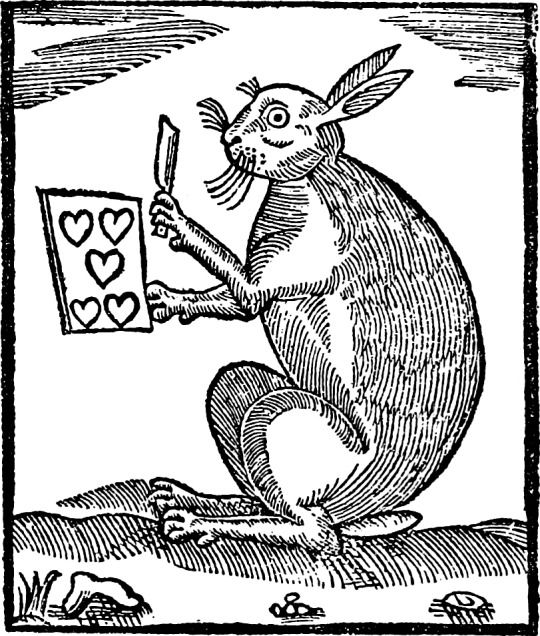
Our novice burglar Bilbo, in Elizabethan terms, would have been identified as a ‘conny’ pickpocket and hence pictorially caricatured as a rabbit in the manner Greene devised below. Effectively acting as a ‘cutpurse’, Bilbo’s attempted theft was cleverly identifiable with classic terminology! 


A discourse, or rather discouery of a Nip and the 
Foist, laying open the nature of the Cutpurse 
and Pickpocket

Image


From ‘The Second and Last Part of Conny-catching’, Pamphlet by Robert Greene, 1592


But Bilbo in this parody had been caught by his own sort. When asked by William what he was, Bilbo blurted out in fright: “bur-a hobbit”. Although it appears Mr. Baggins managed to stop himself from saying ‘burglar’ – the cockney accented trolls likely took ‘bur-a’ as slang for ‘burrow’. At least that seems a sensible way of interpreting Tolkien’s intent. Because this would then match well with Bert calling Bilbo a:

“ ‘… nassty little rabbit, …’ ” as he looked down at our hero’s “… furry feet; …”.
 – The Hobbit, Roast Mutton

In other words the trolls mistook Mr. Baggins for some kind of burrowing rabbit. Leaving us to laugh at how Tolkien’s imaginative genius portrayed the villainous trolls as ‘Conny-catchers’ – almost literally!

A lampooning of Greene’s work was thus satirically melded into the tale. And though Tolkien artfully punned:

“Calling him a ‘nassty little rabbit’ was a piece of vulgar trollery, …”,
 – The Letters of J.R.R. Tolkien, Letter #25 – January/February 1938, Edited by H. Carpenter, 1981   (Tolkien’s emphasis)

there was likely more to the matter than just:

“… the trolls’ use of rabbit was merely an obvious insult, …”. 
– The Letters of J.R.R. Tolkien, Letter #319 – 8 January 1971, Edited by H. Carpenter, 1981   (Tolkien’s emphasis on ‘rabbit’)

For example, one implanted ploy wittily used Elizabethan roguish terminology. The successful ‘catch’ and subsequent asset stripping by ‘cut-throats’ and the like was known in London’s underworld as ‘skinning’ and ‘boning’ – again satirized by The Hobbit lines:

“ ‘I don’t want to have me throat cut in me sleep! …’ ”
“ ‘He wouldn’t make above a mouthful,’ … ‘not when he was skinned and boned.’ ”
 - The Hobbit, Roast Mutton

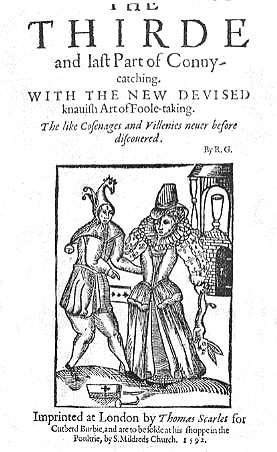
Yet even more telling is how Tolkien had Bert hold Bilbo the ‘rabbit’ upside down:
“… he picked him up by the toes …”.
 - The Hobbit, Roast Mutton

A scene that symbolically mirrored an illustration in one of Greene’s pamphlets.


Image


‘Third and Last Part of Conny-catching’, Pamphlet by Robert Greene, 1592


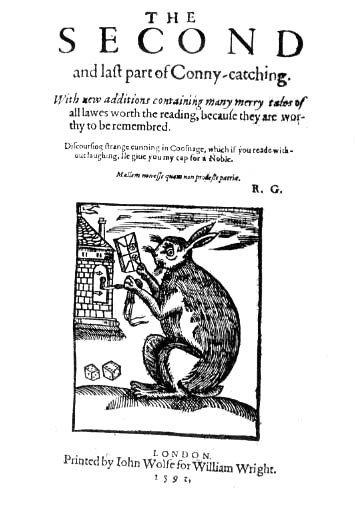
As to Bilbo’s part – we must not forget that he literally held the key. One cannot truly be a burglar without taking from a house. By finding the method of entry into the trolls’ den, Bilbo lampooned another one of Greene’s play pamphlets. With contract ‘at hand’, the “offer of professional assistance” by a “burglar-expert” had been contractually fulfilled.


Image
‘The Second and Last Part of Conny-catching’, Pamphlet by Robert Greene, 1591


However, though burglary required a key – we mustn’t downplay that symbolically it was the troll Bill (the more famous of the three parodied playwrights) who kept it. Expanding his name to William was the ‘key’ clue that would allow the reader to solve the puzzle. For once we correctly expand the other two troll names – it’s a ‘giant’ step forward to unraveling the whole mystery!

No wonder Tolkien allusively admitted:

“… I should not have called the troll William.” - The Letters of J.R.R. Tolkien, Letter #153 – September 1954 (draft), Edited by H. Carpenter, 1981

Choosing a name associated to the most famous of English playwrights - meant that there was good chance, that one day someone would cotton on!


*Tolkien ought to have been aware and have had understanding of the term ‘conny-catching’. It appears in Shakespeare’s: The Merry Wives of Windsor (Act I, Sc. 3) where Falstaff utters: “ ‘There is no remedy; I must cony-catch; I must shift.’ ”


… more to come

Tree
Points: 4 777 
Posts: 3136
Joined: Sun May 17, 2020 7:54 pm
Priya wrote: Tue May 07, 2024 3:27 am Now a ‘conny’ of course is another name for rabbit. And most interestingly Greene’s pamphlets had both criminals and victims drawn as such. While the ‘catchers’ were sometimes displayed as dressed-up Londoners, the victim was usually stripped. So in Renaissance England when talking of ‘conny’ – it was not just about the four-leggers but also the two-legged variety – both the preyed upon human victims and their assailants: deceitful con men.

Our novice burglar Bilbo, in Elizabethan terms, would have been identified as a ‘conny’ pickpocket and hence pictorially caricatured as a rabbit in the manner Greene devised below. Effectively acting as a ‘cutpurse’, Bilbo’s attempted theft was cleverly identifiable with classic terminology! 
 
As to Bilbo’s part – we must not forget that he literally held the key. One cannot truly be a burglar without taking from a house. By finding the method of entry into the trolls’ den, Bilbo lampooned another one of Greene’s play pamphlets. With contract ‘at hand’, the “offer of professional assistance” by a “burglar-expert” had been contractually fulfilled.
This gets better and better. Or rather, where you are taking this intersects with my own Hobbit research - which I have set aside for the last couple of years, but is the true work of my heart. One of the keys that I thought I discovered to the story was the vagabond-criminal culture of Victorian England, which was discovered by the Victorians in the second half of the century as illustrated by various books that explain to the respectable classes the nature of the underground world of beggars and pickpockets and thieves - a society that lives hidden among them. (Basically, one can draw a straight line from these publications to the Harry Potter world of respectable Muggles and hidden wizards and witches.) From these publications I made sense of the first chapter, where Gandalf scratches what was known as a 'Patterer-mark' on the door of Bag-End, which 13 vagabond Dwarves read the next day. Patterer marks were hieroglyphs used by those in the trade - they had meanings like 'This house-holder will shop you to the police', and 'This is a generous house', and were chalked on gates, doors, and doorposts. So your Elizabethan conny-catching 'cant' fits well with my Victorian reading of the queer sign on the door of Bag-end.
Eat earth. Dig deep. Drink water.

Tree
Points: 4 777 
Posts: 3136
Joined: Sun May 17, 2020 7:54 pm
Priya wrote: Tue May 07, 2024 3:27 am One cannot truly be a burglar without taking from a house.
Basically, The Hobbit is all about burglary. And the linguistic theme, while pronounced, is not about giving a world to an invented language, but exploring how language is used to hide and conceal in broad daylight.

For what it is worth, here is my own concise reading of The Hobbit. The story has at either end, respectively, John Stuart's Mill account of a proper name and the nameless thief stealing a cup from a dragon's hoard in 'Beowulf', and in the middle a reworking of 'Ali Baba and the 40 Thieves.' But as this tale in the Arabian Nights is all about burglary, and as Mill explains a proper name as a mark like to that which a thief chalks on the door of Ali Baba, the common theme here is simply burglary - or rather, the red thread running from beginning to end is a grave distinction between the right and the wrong ways to be a burglar.

There is a paradox here which is made by a Professor who once wrote dictionary definitions for the OED. The good burglar cannot be identified. If you have caught a burglar, the apprehension marks this burglar as not so good. Bilbo Baggins of the Shire must become a thief in the shadows, and on return to broad daylight, not a burglar. Actually, ths Hobbit is obviously not a burglar - just look at him! (It takes a wizard who walks up the Hill to the hole to spot that the Hobbit is a burglar - luckily, this happens at the start of the adventure, which saves us readers 50 years of Bilbo growing up unaware of his latent identity.)

But then, the whole adventure is just a Hobbit's holiday, there and back again. Any rumours of burglary in the middle - be it magic ring or Arkenstone - are pure fairy-tales. It is not clear if the Hobbit gained anything from his adventure, he certainly lost the respect of all his neighbours. On the other hand, none of them suspected his new wealth was gotten by burglary, so basically Bilbo Baggins is revealed before us as pretty much a perfect burglar (who cares about respectability if you have chests of gold in your cellar?). And then the sequel washed Biblo lilly-white in the image of his pure and noble heir, Frodo, and nobody today recognizes that Hobbits are, first and foremost, perfect burglar material.

Putting Priya's literary discovery aside for a moment, and focusing on the apprenticeship in burglary of Bilbo Baggins, this episode with the three trolls reveals the Hobbit only just starting to grapple with the art of his new trade.
...a bur-a Hobbit
Rule of burglary no. 1: DO NOT tell owners of purloinable property that you are a burglar.
Eat earth. Dig deep. Drink water.

Tree
Points: 4 777 
Posts: 3136
Joined: Sun May 17, 2020 7:54 pm
All this, to be sure, is what I have learned reading The Hobbit with my children. Had to get hold of the first edition (well, a modern reprint of the first edition) to begin, though. In my experience, children get the burglary theme of the story while most adults that I know walk past it. But then I don't read the story to the adults.
Eat earth. Dig deep. Drink water.

New Soul
Points: 2 817 
Posts: 3091
Joined: Thu Sep 02, 2021 6:24 am
Priya: I never do name changes. Salmarin is a name, not an epiphet. But hehe it is nice thought to do, for those who are fond of it. Less mushy evidence? O_O. In the 16th century society wasn't so concerned with if you had an university study or not. Point was that you were a good crafsman or -woman and could produce what had value. Thanks for the database website!

I think you can see as much you like in Tolkien's work, but all of it remains hypothetical. This is something the English most interests. Still interesting to dig it up. :lol: I am better at home with poets from the mainland.

Chrys: Kids have different mindframe than adults and see tales in simpler frames. So yes, the burgely theme is exciting for them. It is what they can understand, they pick up in the tales. At each age the tales reads differently. Same for us as adults.
Just call me Aiks or Aikári. Notify is off.
Find me stuff in Gondolin.
And let us embark to Valinor!

New Soul
Points: 920 
Posts: 362
Joined: Wed Jun 22, 2022 1:00 am
Hello Chrysophylax Dives

In your last few posts, you’ve succinctly explained in just a few paragraphs - what I’ve felt are some of the sub-surface motives behind some important aspects of The Hobbit. The 'Patterer-mark‘ is an eye-opener for me!

Tolkien appears to have made a distinction between ‘burglar’ and ‘thief’. The latter term was reserved for the likes of Gollum and Smaug - with nasty connotations. While a ‘burglar’ was possibly a ‘good thief’ - as Thorin labeled Bilbo on his deathbed.

I’m not exactly sure why - but I don’t doubt there was a deep philological reason. I’m still pondering on this - the extra oomph - from your views - is definitely invigorating!


Hello Aiks

I do understand that the subject of English period history doesn’t interest everyone. Nor are many familiar with it.

At the end of the day, you are absolutely right - in pointing out that what I propose is just a theory. Still, sometimes a hypothesis can be so compelling - that there is little doubt that the basis is true. Yet, of course, I leave everybody to make their own personal assessment. I wouldn’t dream of ever insisting the evidence supplied is incontrovertible.

One thing Tolkien said, at least a couple of times in slightly different ways, is:

“To me a name comes first and the story follows.”
 – The Letters of J.R.R. Tolkien, Letter #165 – 30 June 1955, Edited by H. Carpenter, 1981

“I always in the writing, always start with a name. Give me a name and it produces a story, not the other way about, normally.” - 1965 Interview with Denys Gueroult

So what was the story behind the names: Tom, Bert & Bill?

Beyond that laid-out in The Hobbit, there must have been one for selecting them in the first place, don’t you think?


————


Cheesy Trollery


From all of this it is evident that the term ‘conny’ had evolved under the Elizabethan era to dually represent ‘con-men’ and ‘conned-men’. The word’s actual etymological roots are uncertain. But there is some evidence it was introduced into England from Wales*. Caught up in the mix is the Welsh love for a delicacy they call ‘caws pobi’; funnily enough known to them as ‘Welsh rarebit’**. But to Englishmen (who have corrupted the name) it’s best known as ‘Welsh rabbit’.

The dish is actually toasted cheese and Tolkien’s awareness of St. Peter ‘conning’ the Welsh out of place in heaven through an enticement of ‘caws pobi’ is an old joke brought up in his lecture: English and Welsh. So subtly included in The Hobbit was his own punning jest about the scarcity of ‘rabbit’ (via the motif of ‘rarebit’) when confusing the trolls:

“ ‘… lots,’ ” and “ ‘… none at all, …’ ”. 
– The Hobbit, Roast Mutton

Tolkien was well aware of the influence of Welsh in Elizabethan literature:

“… Welsh rabbit, pobi is the Welsh word for ‘cook, roast, toast’, and (if Andrew Boorde got it right) it has changed p- to b- because pobi is used as an adjective, after a noun. London was for a while very Welsh-conscious at the time (as seen in Shakespeare), and bits of Welsh crop up in plays and tales.” 
– The Letters of J.R.R. Tolkien, Letter #241 – 8-9 September 1962, Edited by H. Carpenter, 1981   (Tolkien’s emphasis on ‘Welsh rabbit’ & ‘pobi’)

Relaying information from Andrew Boorde’s Book of Knowledge, it’s the earliest known reference to cheese being eaten cooked in the British Isles:

“I am a Welshman … I do loue cawse boby, good rosted chese; …”.
 - The Fyrst Boke of the Introduction of Knowledge, A. Boorde, 1542

And we can see this arising in Tolkien employing what is a supposed parody of some famous lyrics making fun of a poem (Haue you seene the white Lilly grow) written by Ben Jonson (another renowned Elizabethan dramatist):

“… Have you smelt Cauf-bobby tosted
 Or a shipskin roasted: …”. 
– Bodleian MS Harley 6917, fol. 41, B. Jonson, Parody per Folger MS V.a.170, p.30

Hmm … both ‘cheesy rabbit’ toasted and ‘mutton’ roasted! So who knows? Perhaps Tolkien thought there was a close enough association of ‘shipskin’ (meaning sheep skin) to warrant both the Roast Mutton chapter title as well as ‘bobi/boby/bobby’ with a ‘rabbit-like’ hobbit to lampoon Renaissance playwrights using Bilbo and the trolls. Because, of course, the trolls liked to ‘cook’, ‘roast’ and ‘toast’ their meat. Which neatly ties in the scene with Tolkien’s alternate definition:

“… pobi is the Welsh word for ‘cook, roast, toast’, …”. 
– The Letters of J.R.R. Tolkien, Letter #241 – 8-9 September 1962, Edited by H. Carpenter, 1981   (Tolkien’s emphasis in italics & on ‘pobi’)

And so both definitions were encapsulated in Mr. Baggins, as the ‘rabbit’, for he also offered to be a cook:

“ ‘… I am a good cook myself, and cook better than I cook, …’ ”. 
– The Hobbit, Roast Mutton

Only a morsel would Bilbo have made. The trolls though were far more interested in dwarven flesh. Abiding by one of the eight high laws of the conny-catchers – they enacted the law of ‘sacking’:

“… the name of cony-catching law, as there be also other lawes; as high law, sacking lawe, figging law, cheting law and barnards law.” 
– A Notable Discouery of Coosnage, R. Greene, 1591   (my underlined emphasis)

‘Sacking’ being comically reinvented by the Professor of course:

“With sacks in their hands, … they waited in the shadows. As each dwarf came up … in surprise, pop! went a nasty smelly sack over his head, and he was down.” 
– The Hobbit, Roast Mutton

Now when it comes to ransacking, it must be emphasized that Greene had not been alone in a charge of plagiarism. Nashe too had surreptitiously alluded to the same offence by the ‘Bard’. Edward Risden explains about the ‘Ur-Hamlet’ controversy:

“Thomas Kyd had made a ‘pre-Shakespeare Hamlet***,’ and that play served as Shakespeare’s chief source – but ‘Kyd’s Hamlet is now lost’. … Lewis**** includes an excerpt from Thomas Nashe’s introductory epistle to Robert Greene’s 1589 Menaphon that punningly hints at Kyd’s authorship.” 
– Tolkien and the Study of His Sources: Critical Essays, Source Criticism: Background and Applications – pg. 25 (E.L. Risden), Editor: J. Fisher

History, however, would dismiss or make light of both Nashe’s and Greene’s complaints. It would be they that came off worst. Aligned, no doubt in parody, through Bert and Tom sustaining:

“… burns and bashes to remember …”,
 - The Hobbit, Roast Mutton

while William, of course, fared much better.

Lastly for this post, is the powerful imagery that Tolkien left behind. There at ‘curtain call’ it was Shakespeare that took the final bow*****:

“William never spoke for he stood turned to stone as he stooped; …”.
 – The Hobbit, Roast Mutton


Image
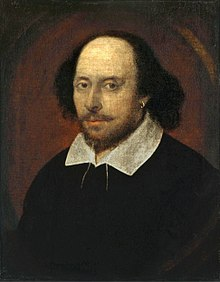
William Shakespeare


The other two ‘trolls’: Robert Greene and Thomas Nashe – were left to forever stare at the Bard’s much greater success:

“… Bert and Tom were stuck like rocks as they looked at him.” 
– The Hobbit, Roast Mutton

Immortally symbolized then, were three giants in the same field with their corpuses set in stone!


* From the Online Etymology Dictionary:

“coney (n.) also cony, “rabbit,” … The word perhaps is from Iberian Celtic …”.

The significance of ‘Iberian Celtic’ with respect to Wales and Bilbo will be more fully developed in another thread to come.

** A record actually exists of Tolkien dining on Welsh rarebit – though long after inception of The Hobbit (see 23 January 1943 entry in The J.R.R. Tolkien Companion and Guide 2017 Edition, Chronology by Christina Scull & Wayne Hammond).

*** Tolkien’s expertise on Hamlet is not in doubt. Per a 17 January 1937 entry in The J.R.R. Tolkien Companion and Guide 2017 Edition, Chronology by Christina Scull & Wayne Hammond – Tolkien lectured on Shakespeare’s play as part of a series of lectures conducted by various members of the University of Oxford faculty. It is highly likely he was aware of Kyd producing a version.

**** Professor Charlton Lewis (The Genesis of Hamlet, 1907).

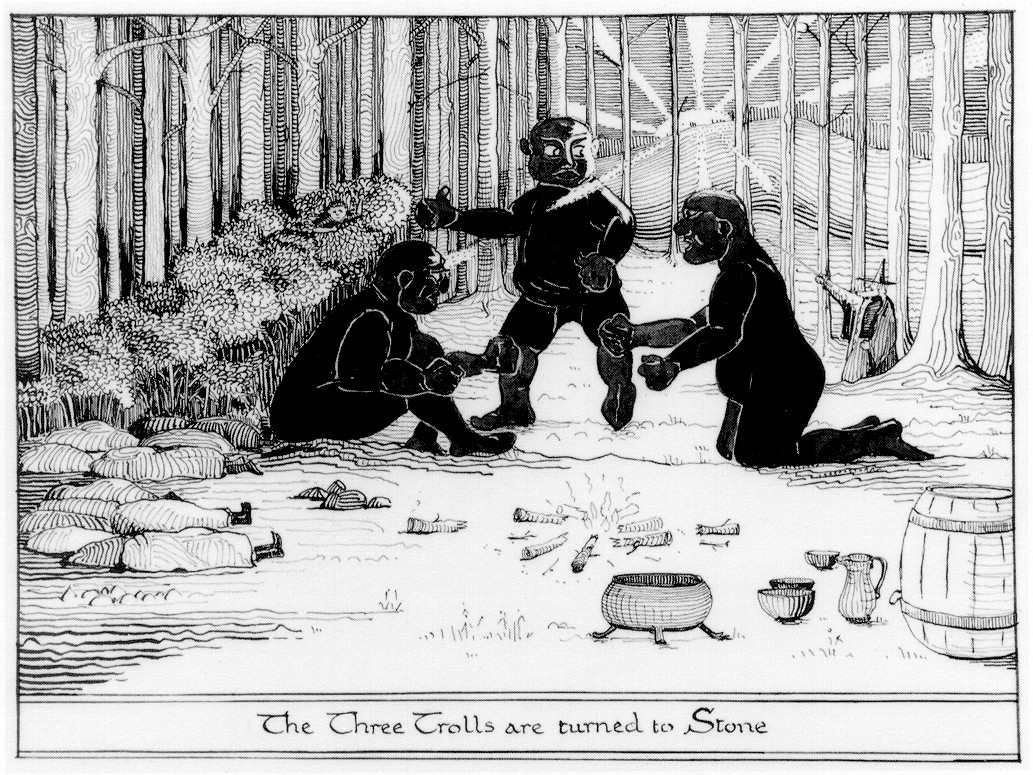
***** Neither The Hobbit text nor The Lord of The Rings text matches well with Picture 100 – The Three Trolls are turned to Stone in J.R.R. Tolkien Artist & Illustrator by Wayne Hammond & Christina Scull. The Hobbit text describes William as “stood turned to stone as he stooped”. Here only one troll is on his feet, but he doesn’t appear to be stooping. Neither can we assume the troll on the right is William – for most young readers would ascribe his posture as kneeling. These may have been the reasons for Tolkien removing it from consideration in the set of illustrations put forward to the publishers.


Image


… more to come


Tree
Points: 4 777 
Posts: 3136
Joined: Sun May 17, 2020 7:54 pm
“William never spoke for he stood turned to stone as he stooped; …”.
 – The Hobbit, Roast Mutton
Superb! I will dig up my old Hobbit file (named Speak Egg!) and post Patterer-mark references and related material.
Last edited by Chrysophylax Dives on Thu May 09, 2024 4:11 am, edited 1 time in total.
Eat earth. Dig deep. Drink water.

New Soul
Points: 920 
Posts: 362
Joined: Wed Jun 22, 2022 1:00 am
Hello Chrysophylax Dives

I’m glad you’ve opened a new thread, which is of course where we will discuss all your research on ‘burglary’ and so forth!


————


… continued from my previous post


The Culmination of Playwright & Rabbit-based Parody

The jests in The Hobbit were now complete with just one other of importance to the parody left to be revealed: Tolkien’s stroke of genius! But at that time, the Professor had no idea that a sequel would happen. Linking the world of The Hobbit to the more serious The Lord of the Rings would obviously become problematic.

Nevertheless, Tolkien couldn’t help but continue the prank by mockingly assigning a bird’s nest to one of the trolls. He left it to us to deduce the nest was a crow’s and the accusing culprit was Bert. Not extractable from the final version – but from the drafts, Tolkien’s intent is quite apparent:

“ ‘… Bert has got a bird’s nest behind his ear.’ ” 
– The Return of the Shadow, From Weathertop to the Ford – pg. 193, The First Phase, 1988

Which by no coincidence lines up exceedingly well with Aragorn striking William and uttering “Get up, old stone”. For of course “Get up” is just a play on ‘Up start’ from Robert Greene’s slur of ‘upstart Crow’. Additionally - it’s no accident Tolkien, with a donnish touch, almost certainly exploited the existence of a crow-stone!

“ CROW … (4) -stone, a rough stone containing iron* ore.”
 – The English Dialect Dictionary, Volume VI – Supplement, J. Wright, 1905

Well ‘stone the crows’ – doesn’t this all tie in ever so craftily with the exceptional witticism left hidden to all but the Professor?

So though the revelations so far have been exceedingly funny. And appreciate them we must. Nonetheless, a finishing touch to the episode was necessary. Tolkien’s masterstroke was a piece of pure brilliance. To make the parody complete required the deft skill of a true artisan. Because not to be forgotten - it was Robert Greene who in maligning Shakespeare had codified him as: ‘Shake-scene’:

“Yes trust them not: for there is an upstart Crow, beautified with our feathers … he is … in his owne conceit the onely Shake-scene in a countrey.” 
– Groats-worth of Witte, bought with a million of Repentance, R. Greene, 1592 (my underlined emphasis)

Which, magnificently, is parodied by Bert when the silly troll tries to show William he is not the :

“… the onely Shake-scene in a countrey.”
 - Groats-worth of Witte, bought with a million of Repentance, R. Greene, 1592

For poor Bilbo was used as a stage-prop, when Bert:

“… picked him up by the toes and shook him.” ! – The Hobbit, Roast Mutton (my underlined emphasis)

And with that touch of theatrical and literary creativity – Professor Tolkien deserves a hearty round of applause!


Image


* Clearly the trolls carried knives - which no doubt had iron content:

“In the end they decided to mince them fine and boil them. So they got a great black pot, and they took out their knives.” - The Hobbit, Roast Mutton

New Soul
Points: 2 817 
Posts: 3091
Joined: Thu Sep 02, 2021 6:24 am
Priya: There is nothing wrong to be spirited about the topic. I just finished a thick intellectual book of Frits van Oostrom on the medieval tale of the Fox Reynaerde, written by Willem in presentday Belgium in the 12th century. Entire poem is 3492 lines and is from the 12th century. The only thing still to read in Middle Dutch. :lol: But it is not a bert, bill or tom.

“I always in the writing, always start with a name. Give me a name and it produces a story, not the other way about, normally.”

Aye, I know these words. Still it was interesting to read through the evidence you found to fundament your ideas how it could be. I think with the applause your research here is concluded? In that case: Thank you! :smooch:
Just call me Aiks or Aikári. Notify is off.
Find me stuff in Gondolin.
And let us embark to Valinor!

Tree
Points: 4 777 
Posts: 3136
Joined: Sun May 17, 2020 7:54 pm
Priya, this sequel is subtle and I am less sure about it than all the stuff above. I feel like the crow inference is one step too much for Tolkien to hope from his readers. But I need to think more. I find it frustrating that I cannot explain to Aiks why the stuff above is (to me) not only credible but also highly plausible, and I now find it frustrating that I cannot explain to myself why I resist this last conclusion. So on this last bit I will come back to you.

For now, thank you so much for this thread! It is a lovely jewel that you unearthed. One of those rare discoveries that entails that my reading of The Hobbit cannot be quite the same again.
Eat earth. Dig deep. Drink water.

New Soul
Points: 920 
Posts: 362
Joined: Wed Jun 22, 2022 1:00 am
Hello Chrysophylax Dives

Thank you for your nice comments. I think it will help, you and all who have doubts, if some cogitation is given to thoughts Tolkien aired:

(a) He clearly liked the idea that some things should remain enigmatic to his readership. Some authors like to retain a bit of information in their back pockets. Going completely ‘open kimono’ diminishes reader intrigue.

“I have thought it best in this Tale to leave the question a ‘mystery’” - Letter #153

“I think that it is good that there should be a lot of things unexplained” - Letter #144


(b) Undoubtedly Tolkien was a philologist at heart, inescapably entwined and absorbed in the subject. Why wouldn’t he have included philological matters in his self-declared ‘magnum opus’?:

“I am a philologist, and all my work is philological.” - Letter #165

“… I am a pure philologist.” - Letter #205


(c) Tolkien encouraged his students to peruse his mentor’s monumental work from which ‘crow-stone’ was extracted:

“E.D.D is certainly indispensable … and I encourage people to browze in it.” - Letter #6


The above reasoning and associated quotes might help assuage lingering concerns!


Hi Aiks

I would like to continue chatting about the subject. Maybe some additional evidence is worth examining?

See my next post!

New Soul
Points: 920 
Posts: 362
Joined: Wed Jun 22, 2022 1:00 am
Trolling for other Clues


Shakespeare withstanding – some may wonder whether Tolkien knew of the two less famous dramatists: Nashe and Greene. Particularly as the Elizabethan era is not recorded as a period that was a speciality of the Professor’s. So some affirmation would certainly help dispel any remaining misgivings.

Actually there exists reasonable evidence that he did. Cited lines from Have with you to Saffron-walden are brought up in Tolkien’s 1955 essay: English and Welsh. Thomas Nashe is explicitly mentioned as the play’s author. And if we are to believe the Professor had familiarity with it – then he should have picked up numerous internal mentions of Robert Greene, along with a realization that part of Nashe’s play revolved around a defense of his friend against literary attacks made by their mutual contemporary: Gabriel Harvey.
Now the other connection of these playwrights (at least two out of the three) to the world of The Hobbit as well as Jack and the Beanstalk was that inbred English verse. Nashe’s and Shakespeare’s inclusion of variants of the rhyme into their plays are practically two of the most ancient written records existing. Tolkien quoted them both in English and Welsh: 

“… Fy, fa, fum, I smell the blood of an English-man”.
 - Have with you to Saffron-walden, T. Nashe, 1596

“Child Roland to the dark tower came,
His word was still, Fie, foh, and fum,
I smell the blood of a British man.” 
– King Lear, W. Shakespeare, 1605

The most ancient known reference is a year earlier than Nashe’s and was made by fellow dramatist George Peele. It was spoken by the character Huanebango (roughly translated from Spanish as ‘Jack the Braggart’) to the character ‘Booby’!

“Fee, fa, fum, here is the Englishman, …”. 
– The Old Wives’ Tale, G. Peele, 1595


Image


Play pamphlet title page of ‘The Old Wives Tale’, George Peele, 1595


One cannot help but make a connection to the troll Bill who accused Tom of being a sore loser:

“ ‘You’re a booby,’ …”. 
– The Hobbit, Roast Mutton

For a ‘booby’ as well as being a clown, of course is a losing player; and a ‘player’, for those working in dramatic circles, can be taken as either an actor or writer of a play’. No wonder the retort was an aptly reflective:

“ ‘Booby yerself!’ ”
 – The Hobbit, Roast Mutton

Now one of the last known incorporations of the ogre-verse into an English fairy-story (separate to a ‘Jack tale’) was possibly why Tolkien chose the surname ‘Huggins’ for Bill. Puss-cat Mew was a firmly favorite fairy tale of the Professor’s. As a very young child pre-1900:

“… one story I was then very fond of called ‘Puss Cat Mew’.” 
– The Letters of J.R.R. Tolkien, Letter #319 – 8 January 1971, Edited by H. Carpenter, 1981   (Tolkien’s emphasis)

In it was once again English ogres and that spine-shivering phrase:

“ ‘Spiflicate those Fairies!’ again said the Ogre in an angry tone, … And he then moved sulkily off, muttering the well-known ‘Fe-fi-fo-fum,’ which is so popular a song among Ogres.”
 – Stories for my Children, Puss-cat Mew – pgs. 16-17, E.H. Knatchbull-Hugessen, 1869  

Written by Hugessen, it would not be at all surprising if Tolkien in mock appreciation took a corrupted form of that Teutonic* rooted name to transpose it into an English ‘Huggins’ instead. Doubly appropriate it might have felt because of the implication of ‘huge’ within its makeup. Believe you me, when it came to names – they weren’t randomly chosen. That was not the way Tolkien was conditioned to think. Bert, Tom and Bill Huggins had a story behind them:

“I always in writing start with a name. Give me a name and it produces a story, not the other way about normally.”
 – 1964 Interview with the BBC

And my oh my – what a story!


Still not convinced? Well there are still other allusive hints the reader might want to ponder upon. One of these is the finding of plundered provender in the trolls’ lair – in particular ‘bacon’:

“… they did not turn their noses up at what they had got from the trolls’ larder. … Now they had … plenty of ale, and bacon to toast in the embers of the fire.”
 – The Hobbit, Roast Mutton

Was this a sly referral back to Shakespeare having allegedly pillaged the works of ‘Francis Bacon’?

“Ronald takes part in the annual Open Debate. The motion is: ‘That the works attributed to William Shakespeare were written by Francis Bacon.’ ” 
– The J.R.R. Tolkien Companion and Guide 2006 Edition, Chronology, 4 April 1911 King Edward’s school debate, C. Scull & W. Hammond

After all it was a motion Tolkien spoke vehemently in favor of, releasing:

“a sudden flood of unqualified abuse upon Shakespeare, …”. 
– The J.R.R. Tolkien Companion and Guide 2006 Edition, Chronology, 4 April 1911 King Edward’s school debate, C. Scull & W. Hammond

Another matter of intrigue, is we have Tolkien’s admission about a couple of lengthy delays in writing The Hobbit:

“The tale halted in the telling for about a year at two separate points: …”.
 – The Letters of J.R.R. Tolkien, Letter #25 – January/February 1938, Edited by H. Carpenter, 1981

One of these occurred after drafting Chapter 1:

“… scribbled on a surviving page of the original Chapter One: ‘Only page preserved of the first scrawled copy of The Hobbit which did not reach beyond the first chapter.’ ”
 – Tolkien: A biography, Enter Mr Baggins – pg. 177, H. Carpenter, 1977


“ ‘I wrote the first chapter first – then I forgot about it, …’ ”. 
– The Annotated Hobbit, Introduction – pg. 8, D. Anderson, 2002

Inspiration appears to have deserted Tolkien for quite a while. Or perhaps there is more than one reason for the lengthy gap. Perhaps he was busy separately creating ‘the troll parody’ in part of the hiatus? Because if we look carefully at the drafts of Chapter 2: Roast Mutton in John Rateliff’s The History of The Hobbit – there is a conspicuous absence of rewrites to the first ‘troll scene’ – and only the most minor of sequential amendments. It is almost as if the episode had been crafted by itself, perfected and then neatly slotted into position.

Lastly, another rather telling clue that Nashe, Greene and Shakespeare were indeed the intended targets of a Tolkien spoof, is the manner in which the first few phrases uttered by each troll bear similarity to lines/scenes in the corresponding playwright’s work. Notably, there is no case of cross-matching.


Thomas Nashe:

“… neither is there anything to be consumed, save ‘one single, single kilderkin of small beer,’ served out in ‘little farthing ounce-boxes …’ ”.
Pierce Pennilesse His Supplication to the Devil, 1592

Compare with The Hobbit where the drink is stated to be beer:

Tom: “ ‘… and the drink runnin’ short, what’s more,’ ”.


Robert Greene:

“Enter a woman with a shoulder of mutton on a spit, and a devil.”
Friar Bacon and Friar Bungay, c. 1589

Compare with The Hobbit, where the trolls were toasting mutton on long spits:

Bert: “ ‘Mutton yesterday, mutton today, and blimey, if it don’t look like mutton again tomorrer,’ ”.


William Shakespeare :

“ ‘Shut your mouth, …’ ”.
King Lear, 1605

Compare with The Hobbit cockney accented utterance:

Bill: “ ‘Shut yer mouth!’ ”.

New Soul
Points: 2 817 
Posts: 3091
Joined: Thu Sep 02, 2021 6:24 am
Priya: Ah continuing on? :lol: I feel more than the 'mystery' and 'leave unexplained' are euphemisms for not knowing how to tackle the problem and write about it. Tolkien was a great writer, but not an expert in everything. His philological knowledge is beyond question. But where things are not his suit, you see mystery and lesser information appearing. Still that leaves us room to fill in the blanks, as fans. :tongue:

I think everyone has a sense over each time period, gotten from language and history classes in school, and further other studies and books. The Elizabethan Era is largely the 16th century with Shakespeare and many others. What I hear much lesser about are the 17th and 18th centuries with influences from the French Revolution in English fairytales from that time period. More of the Stuart and Georgian Era's. I am sometimes wondering about that (1603AD - 1840AD).
Just call me Aiks or Aikári. Notify is off.
Find me stuff in Gondolin.
And let us embark to Valinor!

New Soul
Points: 920 
Posts: 362
Joined: Wed Jun 22, 2022 1:00 am
Hello Aiks

I’m trying to do my best to fill in the blanks. But I must admit - it is guesswork !!!


Why Rabbit?

Tom Shippey has already commented on Tolkien’s probable interest in the etymology of cony/rabbit (see The Road to Middle-earth, Chapter 3 – The Bourgeois Burglar) while debunking Tolkien’s protests of no intentional association to Bilbo. But why did the Professor take such an interest in the words ‘rabbit’ & ‘cony’? Was there more to it than a desire to associate the trolls to the cony-catching pamphlets of Robert Greene? I want to try and discuss ‘cony’ and ‘rabbit’ a little bit more. However I don’t have a clear and logical path. So instead, I’m putting down some random thoughts - where anyone can chip in an opinion.

Going further than Shippey, one might conclude Tolkien intentionally buried a mythological basis for the root of our modern day English ‘rabbit’ by way of:

(a) Using an extensive knowledge of Latin (though I have no absolute proof) - Latin cuniculus being the etymological source for ‘cony’ (see An Etymological Dictionary of the English Language, 1910 by Walter Skeat). 

(b) Cuniculus also meaning ‘burrow’ (i.e. reflected in “bur-a hobbit”).

The evolutionary development of the word ‘cony’ is likely a factor. In Elizabethan times a morphing into an association with criminality (‘Cony-catching’ per Robert Greene’s play pamphlets) occurred. Acted out, of course, by the troll William grabbing Bilbo. For a children’s book, perhaps Tolkien avoided its use throughout as a protest against its debasement by the Elizabethans. In that era, non-drawing room talk arose in literature/plays as the word was pronounced ‘cunny’ – which found dual usage as a vulgar term for a sexual zone of the female anatomy. Similarly, ‘mutton’ was Elizabethan slang for ‘prostitute’. Once again, the trolls (Elizabethan conny catchers) are symbolically associated with a sordid activity (prostitution) in feasting on that particular meat variety.

Now Cony/Conie appears to have been more common rural dialect used by trappers (part of a furrier’s activity in ancient times). Imparted by Bilbo saying: “a man that calls rabbits conies …”. With the term ‘rabbit’ being the posher substitute for ‘cony’ in the more genteel and civilized side of a furrier’s role in the eventual selling of pelts. While the crookedness of furriers who passed off cheaper rabbit fur for the more luxuriant squirrels’ is conveyed and imparted by Bilbo questioning: “ ‘… when he doesn’t turn their skins into squirrels*?’ ”.

Maybe Tolkien provided a feigned point deep in history where ‘rabbit’ and ‘squirrel’ ‘skin-changed’ into the same term: ‘bunny’. The skin-changing source being Beorn himself: “Little bunny is getting nice and fat again …”! And it is not beyond the ridiculous to suggest Tolkien made a luck endowed Bilbo as the mythological source of the ‘lucky rabbit’s foot’. After all Bilbo escaped from the trolls unharmed: “‘… yer nassty little rabbit,’ said he looking at the hobbit’s furry feet; and he picked him up by the toes and shook him.”

Why did Tolkien take such a tack? Well the answer might be manifold:

(i) An illustration of how ‘beast-fable’ had gotten mixed into fairy tale.

(ii) How Bilbo – despite being portrayed early on as a lowly somewhat ‘despised rabbit’, possessed deep-down hidden courage. Courage enough to rise to the occasion and eventually become a full-fledged member of the ‘team’. Mirrored perhaps by Tolkien’s own rugby experience (relayed in Letter #43 – 6-8 March 1941 from The Letters of J.R.R. Tolkien, Edited by H. Carpenter, 1981) in initially being the “despised rabbit on a house second-team to school colours in two seasons” at King Edward’s School, Birmingham.

(iii) Some self-indulgent humor with Lewis Carroll’s Alice’s Adventures in Wonderland in mind. This was the Professor’s way of going down the ‘rabbit-hole’. And although there was no Mad Hatter in his tale, Tolkien likely knew that pelts of smaller animals often ended up fashioned into hats. Perhaps this was Tolkien’s way of etymologically pulling a ‘rabbit out of a hat’!

“I feel like a mortal conjuror … producing his rabbit, …”.
 – Tolkien On Fairy-stories, Manuscript B MS. 4 F 73-120 – pg. 206, V. Flieger & D. Anderson, 2014

New Soul
Points: 2 817 
Posts: 3091
Joined: Thu Sep 02, 2021 6:24 am
Priya: Surely. :nod: Why rabbit? Let's read what it is about... I haven't read Shippey, but might try perhaps one day, so thanks for telling what he says. Etymology is an interesting research behind words, or where they come from. Hmm, you are off to determine what kind of tasty words could be used... bunny, rabbit (or squirrel) by Tolkien, and lighten up the trollscene better. No doubt the Elisabethans had their 'red ear' words to liven up the imaginary, without stepping over the morals and dogmas of the time.

I don't mind it's guesswork, the tying of up the blanks gives a pleasant feeling, not? :lol:
Just call me Aiks or Aikári. Notify is off.
Find me stuff in Gondolin.
And let us embark to Valinor!

New Soul
Points: 920 
Posts: 362
Joined: Wed Jun 22, 2022 1:00 am
Hello Aiks

Glad you don’t mind some guesswork. Of course it has to have some teeny-weeny evidence behind it, as well as be logical. You will see that there is more educated guessing to come as I soon want to explore the Troll Song that Sam sings in The Lord of the Rings. I’m going to try to tie that into Renaissance (Elizabethan and Jacobean) literature too!


Troll Accents


Most readers (including myself) have thought the dialect Tolkien gave the three trolls was England’s most recognized, that being: ‘Cockney’. Recognized scholars who have very much focused on The Hobbit (including John Rateliff, Douglas Anderson and Mark Atherton) are also of the opinion that the trolls’ accents are Cockney.

However, I began to wonder. And I’ll eventually get to that.

Now with regard to Tolkien’s employment of slang and its connection to my playwright proposal, Renaissance drama constituted some of the earliest known uses of the term ‘Cockney’. Notably for:-

Shakespeare:

King Lear, “… as the cockney did to the eels, …”, 

Twelfth Night, “I am afraid this great lubber, the world, will prove a cockney …”.

Robert Nashe:

Pierce Penilesse, “A yoong Heyre or Cockney, that is his mother’s darling.”

It is interesting to note that just about all the troll slang appears in the 1921 publication: 500 of the Best Cockney War Stories. There exist multiple instances (too numerous to list) where employed in individual stories are each of The Hobbit words: ‘blighter, blimey, blinking, copped, ’ell, ’em, ere, gettin’, oo, lumme, yer and yerself’.

Of all the language uttered by the trolls, the word “lumme” appears to be the candidate most readily recognizable as ‘Cockney’. Lumme (and near variants) is short for ‘Lord love me’ – an abbreviated form being a typical trait for this dialect. Some instances where it’s used in association with a Cockney setting that Tolkien ought to have read about, include:

“Jack Dawkins — lummy Jack — the Dodger — the Artful Dodger.” 
– Oliver Twist, C. Dickens, 1838

“ ‘Wot I meantersay, the time ‘as come fer me ter divulge wot I know, and I ain’t agoin’ – cor lumme!’ ”
 – Murder Must Advertise*, D.L. Sayers, 1933

“ ‘Lor’ lumme!’ I says, ‘there’s old Winderpane gawn.’ ” 
– Gaudy Night, D.L. Sayers**, 1935


……


However, despite all the above evidence - doubts started to arise in my mind. Something that I thought I was one hundred percent sure on - well, I began to wonder.

Certainly Tolkien recognized, that when permissible, ‘vulgar’ English could be achieved in literature through:

“… the dropping of aitches …”.
 – The Letters of J.R.R. Tolkien, Letter #193 – 2 November 1956, Edited by H. Carpenter, 1981

But was that vulgar Troll speech Cockney?

Tolkien himself read out aloud Roast Mutton and impersonated the troll voices in a rural English country accent (The Hobbit – E-book, 75th Anniversary Edition). That, quite surprised me!

It’s possible Tolkien could not put out a decent Cockney accent.

Alternatively for recital accents, perhaps a telling clue that the troll scene was ‘staged’ with Elizabethans in mind can be gauged from:

“… ‘West Country’. Well since Elizabethan days that seems to have been favoured as ‘stage-dialect’, …”. 
– The J.R.R. Tolkien Companion and Guide 2017 Edition, Reader’s Guide, Adaptations – pg. 13, C. Scull & W. Hammond  

Tolkien was probably more knowledgeable about Elizabethan stage-drama than we might think. I was also a little surprised to discover that in 1956 he was one of three editors to Elizabethan Acting by B.L. Joseph (a student under Tolkien, I believe).

Despite some contradictory evidence, I still believe Tolkien’s intention for the literature was that The Hobbit trolls spoke Cockney and not a wholly different West-country speech.

Any opinions or comments?


* A Lord Peter Wimsey novel.

** From The Letters of J.R.R. Tolkien, Letter #71 – 25 May 1944, Edited by H. Carpenter, 1981:

“I could not stand Gaudy Night. I followed P. Wimsey from his attractive beginnings so far, by which time I conceived a loathing for him (and his creatrix) not surpassed by any other character in literature known to me, unless by his Harriet.”

Admittedly though, this Dorothy Sayer novel (& the other mentioned) was issued after Tolkien had devised Roast Mutton.
Last edited by Priya on Sun Jun 09, 2024 8:21 pm, edited 1 time in total.

New Soul
Points: 2 817 
Posts: 3091
Joined: Thu Sep 02, 2021 6:24 am
Priya: Interesting note of research, accents. I have little idea of English accents, I ain't British. But I can recognised the major ones.

Wot I meantersay, :rofl: . Clear as water. Slang is used everywhere. Flat London one would say that is. We still don't like clashing vowels, so yes we stuff, change or leave what we speak till it feels like a rolling wave from the tongue. Tolkien knew the middle class dialect, he taught at school students.
Just call me Aiks or Aikári. Notify is off.
Find me stuff in Gondolin.
And let us embark to Valinor!

New Soul
Points: 920 
Posts: 362
Joined: Wed Jun 22, 2022 1:00 am
Hi Aiks

You are hilarious !!!

I’m glad you speak Dutch and not Double Dutch :googly:


More Troll Parody Exposed


Now since the Renaissance era has popped up so prominently – we ought to take a close look at another verse in The Lord of the Rings to see if there’s a similar link. The one I’m referring to is sung by Sam, and is commonly referred to as the ‘Troll Song’. For most there will be no need to jog the memory, nevertheless the first verse is quoted below:

“Troll sat alone on his seat of stone,

And munched and mumbled a bare old bone;

For many a year he had gnawed it near,

For meat was hard to come by.

Done by! Gum by!

In a cave in the hills he dwelt alone,

And meat was hard to come by.”

– The Fellowship of the Ring, Flight to the Ford

Among scholars, it is common knowledge that the origin of this poetry lay well before work was initiated on The Lord of the Rings. For that matter, well before even The Hobbit. It first surfaced as Pēro & Pōdex (Latin for ‘Boot’ and ‘Bottom’) around 1926. Later in 1936 an upgraded version made it into a booklet called Songs for the Philologists privately printed at University College London under the auspices of a former University of Leeds student of Tolkien’s. Within this short publication (taken from typescripts handed out at Leeds) were other pieces of poetry by Tolkien, but I shall focus exclusively on the troll verse.


Image


Songs for the Philologists, 1936


Published as The Root of the Boot, the Professor had a particular fondness for it – even to the point of recommending a particular tune to which it should be recited. Fortunately, we are aware of all the changes from Pēro & Pōdex to The Root of the Boot and thenceforth for the Troll Song in The Lord of the Rings.

One of the first items one might question is the reason behind The Root of the Boot’s inclusion into a University of Leeds typescript in the first place. Why was it there? What philological significance did it have? And did it have a literary antecedent?

The last question is easily answerable. No, it is purely Tolkien’s invention*. That being said, it is arguably the most comic of his contributions subsumed into Songs for the Philologists. Yet though witty and amusing – good reasons for its presence are hard to pinpoint; it does seem a tad out of place.

Certainly some obscure words are included, not in modern-day vocabulary; so of course it might be of some philological interest to university students who were, of course, the intended primary audience. But apart from spreading mirth and tickling his own fancy – was there more to it all? Was it anecdotal in nature thus having deeper meaning?

Tolkien, as I have grown to believe, never created anything of literary originality without a decent amount of thought behind it. So can we come up with a reason that has the ring of truth to it? As I have already suggested an Elizabethan angle to the trolls in The Hobbit, could the same have been the basis for the troll in The Root of the Boot too? Could there be more to the published poem than initially registers? Could it have had some allegorical intent? And if so, could the changes made along the way to the final configuration lend us some clues?

To address the above questions there are three items of interest which I want to bring out and briefly discuss before I launch into a more detailed analysis.

… to be continued


* Per The Return of the Shadow, Arrival at Bree – pg. 144, Tolkien related his sources: “were MSS of my own verses … with many additions of modern and traditional Icelandic songs …”.

However, I can find no Icelandic song that The Root of the Boot might be based upon. Thus, I strongly suspect the entire poem was purely Tolkien’s invention. In any case, quite certainly Tom and John are not Icelandic names.

New Soul
Points: 2 817 
Posts: 3091
Joined: Thu Sep 02, 2021 6:24 am
Hi Priya: Sure. :lol: But I have little heard about Double Dutch. I had to search it up and understand, it is a literal translation of Dutch idiom into the English language. Double English is what we in reverse sometimes do, a literal translation of English idiom into the Dutch language, which is then verbe wise bit awkward. We spread the words out over the entire sentence. That is structured along the feel over Germanic languages. But not always.

Out of place? Words? I think we should accept that it was another time with its own vocabulary and expressions and that was how people spoke or wrote. Critisizing it is useless, the times are in the past and cannot be changed, nor anything that published or created in that time, and received with honours, at which we frown sometimes. The little title of 'Mál-rúnar skalta kunna', means just talk-runes you must know (Younger Furthark). It is Old Norse/Islandic. On the wiki page is more information, that explains a lot and what songs there in the book. I was quite curious to the contents of the book.
Just call me Aiks or Aikári. Notify is off.
Find me stuff in Gondolin.
And let us embark to Valinor!

New Soul
Points: 920 
Posts: 362
Joined: Wed Jun 22, 2022 1:00 am
Hello Aiks

When I say ‘out of place’ - I mean only in comparison to other creations in Songs for the Philologists. It is a personal feeling. But all credit to Tolkien - as I find it the funniest ‘song’ in the whole collection!


… continued from my previous post


Image


‘The Root of the Boot’ – Songs for the Philologists, 1936


(a) The expunging of any matter related to Christianity:

The precursors to the Troll Song have a definite Christian undertone. Unmistakable references are made to heaven and hell, along with eternal burning damnation. The classic crowning halo surrounding the heads of medieval depicted angels/saints is mentioned as well as holy Sunday and a churchyard. The mild oath ‘Oddsteeth’ is a carry down from Elizabethan* usage and meant to convey swearing by ‘God’s Teeth’. It is not a name assigned to the troll.

However, for The Lord of the Rings all religious allusions were removed or replaced with more suitable language. This certainly kept the updated poem in line with the tale’s overall lack of religion:

“It is a monotheistic world of ‘natural theology’. The odd fact that there are no churches, temples, or religious rites and ceremonies, is simply part of the historical climate depicted.”
– The Letters of J.R.R. Tolkien, Letter #165 – c. June 1955, Edited by H. Carpenter, 1981


(b) The ‘Tom’ of the poetry was not Bombadil:

Since we know that Bombadil was not crippled – we can immediately eliminate him as a candidate:

“Tom’s leg is game, since home he came,
 And his bootless foot is lasting lame;” 
– The Fellowship of the Ring, Flight to the Ford

“Now Tom goes lame since home he came,
And his bootless foot is grievous game;” 
– The Root of the Boot, Songs for the Philologists, J.R.R. Tolkien, E.V. Gordon & others, 1936   (correspondingly identical lines to those in Pēro & Pōdex)

Bombadil’s origin, as stated in the novel, is unknown; he is ‘fatherless’. In which case, having an uncle named John (The Root of the Boot and Pēro & Pōdex) or Tim (Troll Song) would provide part of a family tree and imply that indeed he had a ‘father’. Whichever way one chooses to interpret ‘fatherless’** – the fit isn’t good. Even though the Troll Song reappears*** in The Adventures of Tom Bombadil issued in 1962, nevertheless there are many persons called Tom as the name is far from uncommon or unique.


(c) Elizabethan/Jacobean Playwright Involvement:

Some of the more obscure words in the poems also appear in Elizabethan/Jacobean texts – particularly plays. Included in Shakespearean ones are:

‘nuncle’ – King Lear (meaning: mine uncle)

‘bootless’ – King Lear, The Two Noble Kinsmen (meaning: useless)

‘mumbled’ – The Two Noble Kinsmen (meaning: grumbled)

‘portal’ – Hamlet (meaning: doorway)


Now of the three matters discussed above – items (a) and (b) are interesting, but merely side issues – so it is the last one (c) that I’m going to dwell upon.


… more to come


* Swearing by ‘God’s teeth’ can be traced back to King John (1166-1216). By the time of the Elizabethans, oaths employing God’s bodily parts became commonplace:

“God’s teeth is just one of several Elizabethan profanities derived from a sacrilegious reference to God’s person. Others were God’s blood! which became, in later romances, ‘s blood! and God’s wounds, which was diluted to zounds!”
 – What’s in a dirty word when expletives are no longer deleted – even on television? Zounds!, The Los Angeles Times, J. Smith, June 2nd 1987

That Tolkien knew of the ‘zounds’ expletive is not in doubt:

“… expletives, such as tush, pish, zounds, marry, and the like.” 
– The Letters of J.R.R. Tolkien, Letter #171 – September 1955, Edited by H. Carpenter, 1981


** My take is that Elrond’s use of “fatherless” in TLotR was in the same vein as Tolkien’s in a letter to Christopher Fettes:

“So Bombadil is ‘fatherless’, he has no historical origin in the world described in The Lord of the Rings.” 
– Tolkien letter to Christopher Fettes – 1961: Hammond & Scull LotR Companion p.134   (Tolkien’s italicized emphasis, my underlined emphasis)

The Oxford English Dictionary does not give such a definition to the word ‘fatherless’ as underlined in the quote above. However the word ‘unfathered’ has this secondary archaic definition associated to it:

“Unfathered: Of obscure origin …”. 
– Oxford English Dictionary, 2014 Edition

Now ‘fatherless’ and ‘unfathered’ ate philologically commonly rooted. Collins confirms archaic linkage:

“Unfathered: (archaic) fatherless”.
 – Collins English Dictionary, On-line Edition

Imaginably then, this is one of those instances where antiquated vocabulary from a bygone era crept into the text:

“there are a number of words not to be found in the dictionaries, or require a knowledge of older English”. 
– The Letters of J.R.R. Tolkien, Letter #188 – 3 April 1956, Edited by H. Carpenter, 1981   (my emphasis)

Outmoded though it may be – the usage of “fatherless” in The Lord of the Rings was, in my opinion, simply to convey Tom was of unknown origin.


*** Titled: The Stone Troll.

New Soul
Points: 2 817 
Posts: 3091
Joined: Thu Sep 02, 2021 6:24 am
Hi Priya: Oh personal feeling. Ah I didn't get that from your post. *nods*
Just call me Aiks or Aikári. Notify is off.
Find me stuff in Gondolin.
And let us embark to Valinor!

New Soul
Points: 920 
Posts: 362
Joined: Wed Jun 22, 2022 1:00 am
… continued from my previous post


Naturally, when one thinks of English playwrights – the Bard of Avon is the first person to come to mind. But I am not about to step onto a well-trodden road and at length reiterate what many other scholars have already observed and written about. Namely, Tolkien’s aversion to Shakespeare whose works he:

“… disliked cordially …”. 
– The Letters of J.R.R. Tolkien, Letter #163 – 7 June 1955, Edited by H. Carpenter, 1981

All that I will emphasize is that resentment is documented to have been present from schooldays, and one can easily imagine such disdain remained with him throughout life. So was the troll in Pēro & Pōdex and The Root of the Boot a parody of William Shakespeare? Had The Hobbit troll called William been synchronized with earlier poetry? After his University of Leeds days, did Tolkien simply continue to voice a long-standing dislike through a second farcical parody?

We have to remember The Hobbit was the Professor’s first lengthy publication meant for the general public. By no means was he a seasoned writer of fairy tales. We also have to remember that when it came to the plot, Tolkien had no idea Bilbo would eventually be swept into a greater story. He openly admitted:

“Mr Baggins began as a comic tale …”. 
– The Letters of J.R.R. Tolkien, Letter #19 – 16 December 1937, Edited by H. Carpenter, 1981   (my underlined emphasis)

Nobody should doubt the early featuring trolls were part of that initial line of thought. Yet Tolkien clearly had regrets with The Hobbit troll naming as voiced much later on:

“… I should not have called the troll William.” 
– The Letters of J.R.R. Tolkien, Letter #153 – September 1954, Edited by H. Carpenter, 1981   (italicized emphasis on ‘William’)

And I would reason that in the process of writing The Lord of the Rings he realized he’d made a serious mistake. Tom, Bert and Bill were so out of place with the rest of the names – that they stood out like flashing beacons. Perhaps someone some day would come along and guess his clever little secret? And then ‘poof’ – the illusion of a Secondary World with an inner consistency of reality would vanish in a flash! What a disaster that would be!


… more to come

New Soul
Points: 920 
Posts: 362
Joined: Wed Jun 22, 2022 1:00 am
… continued from previous post


Yes, if the trolls of The Hobbit were indeed modeled on three nameable Elizabethan playwrights then how could he justify a mythology-based invented era of long ago? It was one thing taking Norse names for the dwarves and lead wizard from ancient scripts – but quite another admitting the trolls were an inside joke!

Yes, some of the ancient sources were definitely mythical in nature; and names like Elrond, Beorn, Dain and Smaug encountered far away from ‘home’ simply conveyed a sense of the foreign to the English audience for which the children’s fairy tale was primarily intended. No one would question the authenticity of his invented world from his naming of such characters. However – Tom, Bert and Bill were collectively quite another thing!

Once The Lord of the Rings developed into a serious adult-oriented fairy tale – I suspect Tolkien realized he couldn’t afford to be so slack. He needed material for the novel and conveniently some of his earlier works could be adapted. The Root of the Boot was certainly a malleable choice. But he had to be careful as allegorical implications were a strict no-no. Yet Tolkien gave the game away with the line:

“ ‘… It looks like the leg o’ me nuncle John …’ ”,
 - The Root of the Boot, Songs for the Philologists, J.R.R. Tolkien, E.V. Gordon & others, 1936

How could Tom possibly recognize a leg belonging to his uncle? Was Tolkien’s intent to create purely tongue-in-cheek jesting poetry? Or was the ‘bone’ a metaphor for something else?

To the last of the above, originally – I believe the answer is ‘yes’. But for The Lord of the Rings there was a greater matter, in the same line, he couldn’t let stand. One absolutely necessary and subtle change was deliberately made to quell the possibility of associating the poem to a parody. One simple alteration, which would wholly quash any potential disputation, was the recasting of ‘nuncle John’ to ‘nuncle Tim’. Compare:

“ ‘… It looks like the leg o’ me nuncle John …’ ”,
 – The Root of the Boot, Songs for the Philologists, J.R.R. Tolkien, E.V. Gordon & others, 1936

to:

“ ‘… For it looks like the shin o’ my nuncle Tim, …’ ”.
 - The Fellowship of the Ring, Flight to the Ford

One must ask oneself why did Tolkien decide on such an alteration. ‘John’ or ‘Tim’ – what did it matter*?

Oh but it did – for it would entirely destroy the original parody. As my proposition is that Tolkien made the change, because ‘John’ in The Root of the Boot was a lampooning of a relatively well-known playwright from Elizabethan/Tudor times; namely ‘John Heywood’. And he was cast in the poem alongside two famous others. Those being ‘William Shakespeare’ and ‘Thomas Heywood’!


Image

John Heywood c. 1497- c. 1580


… more to come


* Although it is possible Tolkien felt ‘shin/Tim’ offered better internal rhyming rhythm than ‘leg/John’, still his original choice remains suspiciously intriguing. Especially as similar internal rhyming is not present throughout.

New Soul
Points: 2 817 
Posts: 3091
Joined: Thu Sep 02, 2021 6:24 am
Hi Priya: I read both posts. Innerconsistency of reality (innerlijke consistentie van realiteit - Dutch) remains always a garble of words, that are quite difficult to get an understable grip on, better I guess it would be as realistic innerconsistency. Somehow if it is written in Germanic way it is clearer, something we do over the pond on the mainland. Or in Dutch 'realistische innerlijke consistentie'.

I found this answer online: "While a story does not need to be consistent with reality, it should have the same consistency with itself as reality has. "Inner consistency" simply refers to being consistent within itself. "Of reality" means of same quality as the self-consistency of everyday reality we know." So yes, the change of ordening in the words works better for me.

Did Tolkien a dislike to Shakespeare? That is too bad, Shakespeare plays are pretty enjoyable. Yeah some people have that. :shrug: Then it might that he used elements of the tales and rediculed them quite in his tales, and perhaps on three poor trolls?

Interesting how this goes further. :thumbs:

Just call me Aiks or Aikári. Notify is off.
Find me stuff in Gondolin.
And let us embark to Valinor!

New Soul
Points: 920 
Posts: 362
Joined: Wed Jun 22, 2022 1:00 am
Hello Aiks

Did Tolkien a dislike to Shakespeare?
Yes, that seems to be my impression. And yes I think there’s a little more to the matter which one can reasonably piece together.


… continued from previous post

Now I’m not about to embark on a biography of the Heywoods. There are many sources available for finding out more about their lives and works. A few details that I want to highlight are summarized below.


————————————————————
Thomas Heywood (c. 1574 – 1641)

(a) A prolific playwright and a probable rival of William Shakespeare (1564 – 1616).
(b) Aired discontent at ‘borrowing’ among playwrights – particularly his own poetry by Shakespeare (Jaggard affair*).

John Heywood (c. 1497 – c. 1580)

(a) Another prominent English playwright who died before William Shakespeare’s career took off.

(b) Better known as the first English collector (not inventor) of adages and proverbs.

(c) Shakespeare ‘borrowed’ some of his collected phrases. The following bear great similarity to those documented in various John Heywood works:


“All’s Well That Ends Well” – play title c. 1604

“He must needs go whom the devil drives” – All’s Well that Ends Well

“the ill wind which blows no man to good” – King Henry IV
“fast bind, fast find” – The Merchant of Venice

“Happy man be his dole” – The Merry Wives of Windsor
“swine eat all the draff” – The Merry Wives of Windsor
“Let the world slide” – Taming of the Shrew
“Shall I not take mine ease in mine inn?” – King Henry IV
“Two may keep counsel when the third’s away” – Titus Andronicus

————————————————————


So given the above information on the Heywoods – perhaps you can see where I’m heading. Finally, the underlying meaning behind The Root of the Boot is plainly before us. It squarely has a philological backbone. Tolkien has satirically poked fun at Shakespeare (and his contemporaries) for using other people’s works. The poem can be undone and its secret unlocked when interpreted as follows:

So the troll parodies William Shakespeare. Tom is Thomas Heywood. His uncle** is John Heywood.


Image

Thomas Heywood’s ‘An Apology for Actors’ – Connection to Shakespeare


By depicting Shakespeare as ‘chewing on the bones’ of his uncle and grumbling***  at the same time – effectively Tom charges the Bard of using John Heywood’s proverbs and epigrams without permission:

“A troll sat alone on his seat of stone,

And munched and mumbled a bare old bone;
…
‘Young man,’ says the troll. ‘that bone I stole; …’ ”.

– The Root of the Boot, Songs for the Philologists, J.R.R. Tolkien, E.V. Gordon & others, 1936 

This was plagiarism – so to speak. Shakespeare, in Tolkien’s mind, should have known better. Even if the ‘stolen’ material constituted everyday catchphrases (as more explicitly stated in Pēro & Pōdex), Shakespeare should have: “ask thee leave of me nuncle”.

And so this literature, which was illicitly dug up, was literally portrayed as grave robbery. That is why Shakespeare is cast as a ‘troll’. And a very well-spoken one at that. Yes, a major give-away is the construction of an unusually eloquent troll – as opposed to the normal dumber variety.

The Bard of Avon who rose far above his peers – incomparable and all alone:

“A troll sat alone on his seat of stone,”,

– The Root of the Boot, Songs for the Philologists, J.R.R. Tolkien, E.V. Gordon & others, 1936 

and whose place in English literature was set in stone, had a stain on his character!


… to be continued


* Thomas Heywood complained about William Jaggard (a publisher and print house owner) wrongly attributing his poems to Shakespeare in The Passionate Pilgrim, 1599 (1st & 2nd editions) Shakespeare apparently knew about it but is thought to have, for many years, turned a blind eye to the misappropriation. It wasn’t till the 3rd edition in 1612 (after complaints from Heywood) that a correction was made.

** Historians have speculated that both John and Thomas Heywood were related. Especially because they were both writers of plays – a seeming family tradition. However, there is no absolute proof of this. In any case, Tolkien might have been thinking along the lines of a ‘lost’ family tree connection, that would still make an older John – genealogically Thomas’ uncle. 

*** Grumbling in that it was unfair to be singled out. After all such ‘thievery’ had been going on since the dawn of writing.

New Soul
Points: 2 817 
Posts: 3091
Joined: Thu Sep 02, 2021 6:24 am
Priya: I find it always quite odd to make something of long ago rediculous. I can understand kids and teenagers do it, but adults? People in Shakespeare's times were not concerned to use the works of others and create entertainment out of it. Your rights as nobody were not the same as a famous face. That is in the 20th century quite different. Interesting segment. :lol:
Just call me Aiks or Aikári. Notify is off.
Find me stuff in Gondolin.
And let us embark to Valinor!

New Soul
Points: 920 
Posts: 362
Joined: Wed Jun 22, 2022 1:00 am
Hi Aiks

Poking fun in a light-hearted way of famous people long gone, is I think typically what a teacher what enjoy doing with his students. After all, philology is an extremely dry subject. Boring to most of us. But glad you are finding my investigation interesting!


… continued from my previous post

So - though Shakespeare’s actions were not ethically right, a case of outright larceny fails to stand up to legal scrutiny. Writers, after all, had up to that time in English history, ‘borrowed’ from each other with hardly any legal consequences. Thus, an accusation of literary theft is overall not a worthy one. Besides Tom admits that his uncle was no saint in ‘thieving’ phrases from predecessors too:

“For old man John was as proper a thief”.
 – The Root of the Boot, Songs for the Philologists, J.R.R. Tolkien, E.V. Gordon & others, 1936 

The charge on Shakespeare thus rebounds on Tom – who comes off much worse* after booting the troll:

“Now Tom goes lame since home he came,
And his bootless** foot is grievous game;”. 
– The Root of the Boot, Songs for the Philologists, J.R.R. Tolkien, E.V. Gordon & others, 1936 

While Shakespeare’s reputation remained unaffected: 

“But troll’s old seat is much the same,”. 

The Root of the Boot, Songs for the Philologists, J.R.R. Tolkien, E.V. Gordon & others, 1936

John Heywood was a devout Catholic, hence the inclusion of the usual black attire for Sunday mass:

“As ever wore black on a Sunday -”.

The Root of the Boot, Songs for the Philologists, J.R.R. Tolkien, E.V. Gordon & others, 1936 

Uncle John, of course, was deservedly laid to rest in a churchyard with birches*** – because he played his role as one of the earliest English philologists through his ‘search’ (in his backyard of England) and eventual collection of phrases and sayings set forth in his book of proverbs:

“‘… It looks like the leg o’ me nuncle John

As should be lying in the churchyard.

Searchyard, Birchyard!‘ etc.”.

– The Root of the Boot, Songs for the Philologists, J.R.R. Tolkien, E.V. Gordon & others, 1936 

However just like Shakespeare continued to ‘chew on his bones’ – so have many followed in the Bard of Avon’s footsteps – including Tolkien himself!


… more to come


* A reflection perhaps of Thomas Heywood having to eat ‘humble pie’ in eventually removing the blame for The Passionate Pilgrim affair from Shakespeare (and placing it entirely on Jaggard) in his An Apology for Actors, 1612. 


Image
Thomas Heywood’s ‘An Apology for Actors’, 1612 – Airing Grievances against W. Jaggard


**  Thomas Heywood also used the term ‘Bootless’ in at least two of his plays: Edward IV and The Wise-woman of Hogsdon.

*** See explanation by Christopher Tolkien in The Return of the Shadow, Arrival at Bree. ‘Birches’ represented philological studies while ‘oaks’ symbolized modern literature. These two branches of the English syllabus had different proponents in the University of Leeds English department during Tolkien’s tenure. So the poem could quite well also portray a ‘Lit’ versus ‘Lang’ skirmish.
Last edited by Priya on Fri Jul 19, 2024 3:14 am, edited 1 time in total.

New Soul
Points: 920 
Posts: 362
Joined: Wed Jun 22, 2022 1:00 am
... continued from previous post

Yes, the Professor also ‘borrowed’ several of Heywood’s amassed phrases for The Hobbit:

“out of sight and out of mind” – Chapter 5
“Out of the Frying-Pan into the Fire” – Chapter 6 title
“It is an ill wind, … that blows no one any good” – Chapter 14

And continued to do so for The Lord of the Rings, even adding subtle corruptions:

“Make haste while the Sun shines” – Book 1, Chapter 8
“One ill turn deserves another” – Book 6, Chapter 8

For of course according to Tolkien, his mythology was the ‘true’ source – not Heywood:

‘Make hay while the sun shines’, from The Proverbs of John Heywood*, 1546
‘One good turn deserves another’, from The Proverbs of John Heywood, 1546

So there we have it: The Root of the Boot – a complex web of proverbs, plagiarism and playwrights – cemented together by a parody masterfully depicted through rhyme. Yes, Tolkien made us think about ‘titles’ in relation to content. No, they were not casually invented. Just as the chapter title: At the sign of the Prancing Pony, and its contents, had ‘signs’ of connections to ‘paying up’ (legem pone), ancient words/sayings and Tudor/Elizabethan personages – so similarly did The Root of the Boot. Except in the case of the latter the pay up was of a different kind. For we should think of Boot in the sense of a verb instead of a noun. What exactly was the source (Root) of the kick up (Boot) the backside? In my opinion it was simply a historically famous incident – that Tolkien thought was not only amusing – but of great philological interest!

Hard to believe? Not convinced? Find it strange that Elizabethan dramatists could play such a role in Tolkien’s creativity? Perhaps you might be swayed by, I think, some extraordinary revelations in a new thread. Never ever put forward before is entirely new evidence for Tolkien’s choice of the name: Bilbo. And even Mr. Baggins, in anticipating his encounter with Smaug, would have agreed:

“There is no fyre without some smoke” !
The Proverbs of John Heywood, Part II – Chapter 5, 1546


*Originally titled: A Dialogue conteinyng the nomber in effect of all the Prouerbes in the Englishe tongue, J. Heywood, 1546.

New Soul
Points: 2 817 
Posts: 3091
Joined: Thu Sep 02, 2021 6:24 am
Hi Priya: I have no idea, but it's interesting how your mind steps progressingly through all the questions on the path. *yawns* I'll catch up with a better post next time. :winkkiss:
Just call me Aiks or Aikári. Notify is off.
Find me stuff in Gondolin.
And let us embark to Valinor!

Post Reply