Hello Priya,
I do like your new icon :)
I am always a little leery of an early construction which has ultimately been discarded, except in a few elements. The usefulness is limited in my opinion - but this preliminary stage does show how much thought Tolkien put into his final product.
You presume too much. Were it the case that, working on one text, allegory A was replaced by allegory B, I would still argue that the discarded allegory has much to teach us. But we have two texts, a set of lectures delivered to Oxford undergraduates and a single lecture delivered to a room of distinguished Professors. You cannot assume that the change of allegory reflects solely an internal development of thought with regard to the allegory. Before making that assumption you have to consider whether the two allegories were deemed correct for their respective audiences.
Hmm … rock gardens … and Anglo-Saxons don’t really gel that well. I know Tolkien was a keen gardener, but was that activity popular among his colleagues? That’s something Tolkien might have pondered upon.
Apparently rock gardens were popular among Edwardian gardeners. But one main point of this allegory, so far as I can see, is to prompt precisely the kind of reaction that you give. The point is historical and it serves to place the Anglo-Saxon author as a modern in contrast to the wild ancient heathenism found in the poem itself. Presenting the poem as a rock garden serves to underline that the poem was made on our side of the great historical divide of the English peoples (migration and conversion).
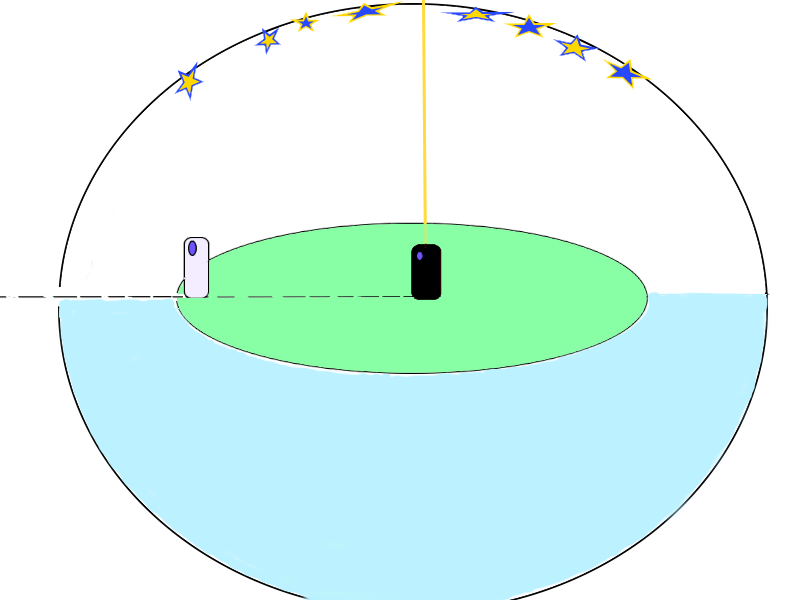
The ‘man’, the ‘tower’, the ‘sea’ and the ‘friends/descendants’ are a bare minimum - I think you’ll agree.
Well obviously I do not agree. Ultimately, I might agree but whilst I appreciate that the rock garden allegory does not do it for you, the fact is that in this original version of the allegory there is no view on the sea. I think you need to account for that before including the 'sea' in your core.
Also, I place the 'stones' within any bare minimum.
But I think that Tolkien could even have gone leaner by categorizing the ‘friends/descendants’ under just one grouping.
The secondary literature that begins with Chance and Shippey vanishes the descendants and thereby reconstructs the allegory as a simple parable of an artist 'the man' and the critics 'the friends', and as a result completely fails to grasp the
argument of 'Beowulf: the Monsters and the Critics'. My work on the allegory begins by identifying key friends (Strong, Chadwick) and descendants (Ker, Chambers), thereby relating the allegory to the argument of the essay - in which the friends appear as clueless idiots beyond the pale of argument while Tolkien conducts an argument with the descendants. So I absolutely resist any reduction of friends and descendants into a single group of critics, as per Chance and Shippey.
Why Tolkien decided to use the term ‘friends’ for critics living in a different era and who had never been actually acquainted with the ‘man’ - seems a bit strange to me. A ‘friend’ doesn’t usually dismantle bits of one’s property (work).
You are perhaps luckier in your friends than most of us. However, even you have surely experienced the posting of a nifty bit of research on the plaza, or elsewhere, and then watching your online friends gut your idea as they pick up the wrong end of the stick and miss what you were trying to say?
It is worth noting that the rock garden allegory comprises three groups of critics: friends, best-friend (Chambers), and unfriend (Jusserand). Even the best-friend fails to get what the poet was trying to do; the friends are enthusiastic about the poem, but unfortunately have no clue what it is; the un-friend does not like the poem, nor Anglo-Saxons in general. I suggest that substituting Hobbits for Professors helps picture the friends of the allegory - Pippin stealing a look in the Orthanc stone is not an enemy, he is a foolish friend.
I reject the old stones (of which the tower was built) being anything else other than directly and symbolically related to the poem itself. Unrelated heathen/Christian stories have no place.
How can something unrelated to Beowulf, and not used within the poem, even in the most tangential way, have conceptually been a stone to build the tower?
I’m at a loss to understand:
Unrelated heathen stories have a place in the allegory because they have a place in the poem itself!
Perhaps we are getting mixed-up?
By ‘unrelated’ - I mean something which did not make it into the poem, either explicitly or implicitly.
The mix-up arises because of your notion of a 'undiffused and original Beowulf story', which is something distinct from the poem. This folktale has been worked up by the Anglo-Saxon poet
together with a load of historical, legendary tales. So long as we are talking of
Beowulf the poem, then all the stones used to make the tower are found in the poem, just as you say. My point was only that many of these stones are unrelated to the 'undiffused and original' folktale about the bear-boy and the monster.
I think the ‘stones’ of the Tower Allegory had a mythical component to them in Tolkien’s mind. The tale of Beowulf certainly has its fairy tale side. We can then say, with reasonable certainty, that the tower which was built must then have had a mythical side too. Passed down legends and fairytales were then part of the poet’s ‘inheritance’.
Wow! We have a possible point of convergence - though it remains some way off. We have yet to discuss the sea. In my reading, the mythical dimension of the allegory is given by the sea, which later in the essay is dubbed the Shoreless Sea, and which the exordium tells us is what the ancient mythical king came out of - just as did Elendil in Tolkien's fantasies. In my view, we discover myth in the allegory by considering the sea, just as we discover myth in the rest of the essay by examining the monsters.
So read, some of the old stones are myths. The stones that are the monsters are mythical stones, as also is the tale of Scyld Scefing, the king who came over the sea. On the other hand, the legend of, e.g., Finn and Hengest is not mythical - it is a historical legend placed by the poet on the outer edges of the poem. Beowulf himself steps out of a folktale, but Tolkien argues that his juxtaposition with the mythical monsters transforms folktale hero into (almost) mythical hero.
All of this is easier to see with the rock garden allegory: the mythical stones are at the center, on the outer edges are historical legends - except for the stone at the entrance to the rock garden, which is also mythical. When all the stones are gathered into the form of a tower this differentation of stones is lost. The only mythical dimension that is visible in this allegory is the sea-view.
Returning to your notion of a progression of thought that develops the allegory, however, I would say that its next incarnation - as a fairy-element in LotR - draws the point explicitly by placing, within the tower, a palantír, a mythical stone.





 Oh yeah we studied King Sheave, I do remember. I have not forgotten that. The key passage is what the reader/listener should do with the myth, Tolkien is telling that. It stands out and certainly speak to me, that brings up an emotion.
 Yeah true, what I thought, adaptation to the situation of what the audience is, professors or students. That is natural thing to do. Students need more explanation to understand and see all the threads, where professors don't need that anymore and do get a different adressing of the material.